ACM Panel Installation
in San Jose, CA
Precision Aluminum Composite Material Panel Installation in San Jose
Free Estimates
Free On-Site Consultations
What Is ACM (Aluminum Composite Material)?
Aluminum composite material is a sandwich panel product consisting of two thin aluminum face sheets, typically 0.5mm thick, bonded to a core material under heat and pressure. The core is the variable in ACM construction — it determines the panel’s weight, rigidity, and fire performance characteristics — and selecting the correct core type for a given application is one of the most important decisions in any ACM specification.
Standard Polyethylene Core
Standard ACM panels use a polyethylene (PE) core, which is lightweight, highly rigid for its weight, and cost-effective. PE core panels are appropriate for interior applications, signage, and exterior cladding on low-rise buildings in jurisdictions where fire-rated cladding is not required. In California, however, PE core ACM panels are restricted from use as exterior cladding on most occupied buildings by the California Building Code, making fire-rated core panels the default specification for commercial construction in San Jose.
Fire-Rated Mineral-Filled Core
Fire-rated ACM panels use a mineral-filled core compound that meets the requirements of California Building Code Section 1403 for exterior cladding on buildings of various construction types and heights. The mineral core is non-combustible or low-combustible, depending on the specific product, and passes the required fire testing for exterior cladding applications. For virtually all commercial ACM panel projects in San Jose, fire-rated core panels are the correct specification, and we use them as a matter of standard practice on every commercial project.
FR (Fire Resistant) and A2 Core Products
Some ACM manufacturers produce panels with A2-rated mineral cores that meet the most stringent European fire classifications and are increasingly specified on California projects where the authority having jurisdiction requires performance beyond the standard fire-rated core. For high-rise buildings, healthcare facilities, and other occupancy types with elevated fire code requirements, A2 core panels provide a clear path to code compliance.
ACM Panel Surface Finishes
The aluminum face sheets of ACM panels are finished at the factory using coating systems that define the panel’s appearance and long-term performance. Finish selection is one of the most consequential decisions in an ACM specification because it determines color stability, gloss retention, and resistance to the UV exposure that San Jose’s climate delivers year-round.
PVDF (Kynar) Finish
PVDF coatings, commonly specified under the brand name Kynar 500 or Hylar 5000, are the industry standard for exterior ACM panels on occupied buildings. The coating is applied to the aluminum face sheets in a coil coating process before panel fabrication, producing a finish with outstanding adhesion, UV resistance, and color stability. Most PVDF finish warranties on ACM panels run 10 to 20 years against chalking and fading, and the real-world performance of PVDF-finished panels in California’s climate consistently meets or exceeds those warranty terms.
For San Jose commercial buildings, retail storefronts, and any exterior ACM application where long-term appearance retention matters, PVDF is the appropriate finish specification.
Polyester Powder Coat
Polyester powder coat finishes are a lower-cost alternative to PVDF and are suitable for sheltered applications, interior use, and projects where budget constraints make PVDF impractical. Powder coat finishes offer good color uniformity and a wide color range but are less UV-stable than PVDF over extended exterior exposure. For primary exterior cladding on San Jose commercial buildings, polyester powder coat is generally not the preferred specification.
Anodized Finish
Anodized ACM panels feature aluminum face sheets that have been anodized before panel fabrication. Anodizing converts the aluminum surface to a durable integrated oxide layer that offers a metallic depth and character that painted finishes do not replicate. Anodized ACM is available in clear, champagne, bronze, and dark bronze tones and is commonly specified for contemporary commercial projects where a refined metallic appearance with premium longevity is the design intent.
Brushed and Patterned Finishes
Beyond color, ACM panel face sheets are available in brushed, mirror, and patterned surface textures that add physical dimension to the panel appearance. Brushed metallic finishes are widely used in contemporary commercial architecture throughout Silicon Valley and read as a high-quality, premium material under close inspection. Digital printed finishes that replicate wood grain, stone, and other natural materials are also available from select manufacturers for projects where a natural material aesthetic is specified with the practical advantages of aluminum construction.
Where ACM Panels Are Used in San Jose
Commercial Office Building Facades
Office building re-cladding is one of the most common ACM panel applications in the San Jose commercial market. Buildings constructed in the 1970s through 1990s along North First Street, Brokaw Road, Stevens Creek Boulevard, and throughout the Silicon Valley office corridor frequently carry exterior finishes that are visually dated and physically deteriorated. Re-cladding with a contemporary ACM panel system is one of the most cost-effective ways to reposition a commercial building in the leasing market, and the installation process can often be executed without displacing tenants in occupied buildings.
Retail Storefronts and Tenant Improvements
Ground-floor retail and restaurant storefronts throughout San Jose use ACM panels extensively for brand-consistent facade treatments, canopy soffits, column cladding, and entry features. ACM’s ability to be fabricated in custom colors matched to brand specifications makes it the material of choice for national and regional retailers who need consistent storefront appearance across multiple locations. We work on retail tenant improvement projects throughout the South Bay, including storefronts along El Camino Real, Santana Row, Downtown San Jose, East San Jose commercial corridors, and neighborhood retail centers throughout Santa Clara County.
Multi-Family Residential and Mixed-Use Development
Mid-rise and podium-type residential construction throughout San Jose increasingly incorporates ACM panels as part of the exterior cladding package. For developers and ownership groups managing long-hold assets, ACM’s combination of fire code compliance, low maintenance, and contemporary appearance is a genuinely practical combination. We install ACM cladding systems on multi-family and mixed-use projects working directly with general contractors and development teams.
Medical Office and Healthcare Facilities
Medical office buildings and healthcare facilities throughout the South Bay regularly specify ACM cladding for exterior renovation and new construction. Healthcare facilities have specific requirements for exterior cladding performance and documentation, and fire-rated ACM panels with mineral-filled cores are a standard specification in this building type. We have experience working within the quality and documentation requirements of healthcare construction projects.
Tech Campus and Light Industrial Facilities
The North San Jose tech campus corridor, Alviso, and the broader Santa Clara County light industrial market include a significant inventory of buildings whose exterior cladding needs updating. ACM panels are a practical and cost-effective choice for light industrial and tech campus buildings where a clean, contemporary facade appearance is the goal without the cost of premium architectural systems.
Contemporary Residential Accents and Feature Elements
High-end residential renovation projects and custom homes in San Jose neighborhoods like Willow Glen, Almaden Valley, and the Rose Garden area incorporate ACM panel accents as part of contemporary exterior designs. Garage facades, entry features, accent walls, and gable end treatments in ACM are a natural fit with the clean lines of modern residential architecture, and the material’s light weight and ease of fabrication make it practical for the smaller-scale applications typical of residential projects.
ACM Panel Fabrication and Custom Profiles
One of the defining practical advantages of ACM panels is their fabricability. Aluminum composite material can be routed, scored, bent, and formed into three-dimensional configurations that solid cladding materials cannot match at equivalent cost.
Return Bends and Box Profiles
ACM panels can be fabricated with folded returns on all four edges, creating a rigid tray or box profile that conceals the panel edge and creates a clean finished appearance at corners and reveals. Return-bent panels are the standard configuration for most commercial ACM installations and produce the crisp, precise shadow lines that characterize contemporary commercial facade design.
Column Wraps and Curved Panels
Columns, curved walls, and non-planar architectural features can be clad with ACM panels fabricated to the required radius. Tightly curved applications require specific panel thickness and core selections to achieve the bend without cracking the face sheets, and we work with fabricators experienced in curved ACM applications to confirm that the specified geometry is achievable before material is ordered.
Reveal Joints and Shadow Lines
Horizontal and vertical reveal joints are a common design element in ACM panel facades. Reveals create visual rhythm on a building facade, define panel zones, and add shadow line depth that makes a facade read as more architecturally refined. Reveals are created through the panel layout and joint detailing rather than through separate trim pieces, and their consistent execution requires careful layout work during installation.
Canopies and Three-Dimensional Features
ACM panels are widely used for building canopies, entry features, and other three-dimensional architectural elements because the material can be fabricated into complex folded and mitered configurations. A canopy fascia and soffit, for example, can be fabricated as a single continuous ACM assembly that wraps from the face to the underside, creating a seamless appearance without exposed edges or transitions.
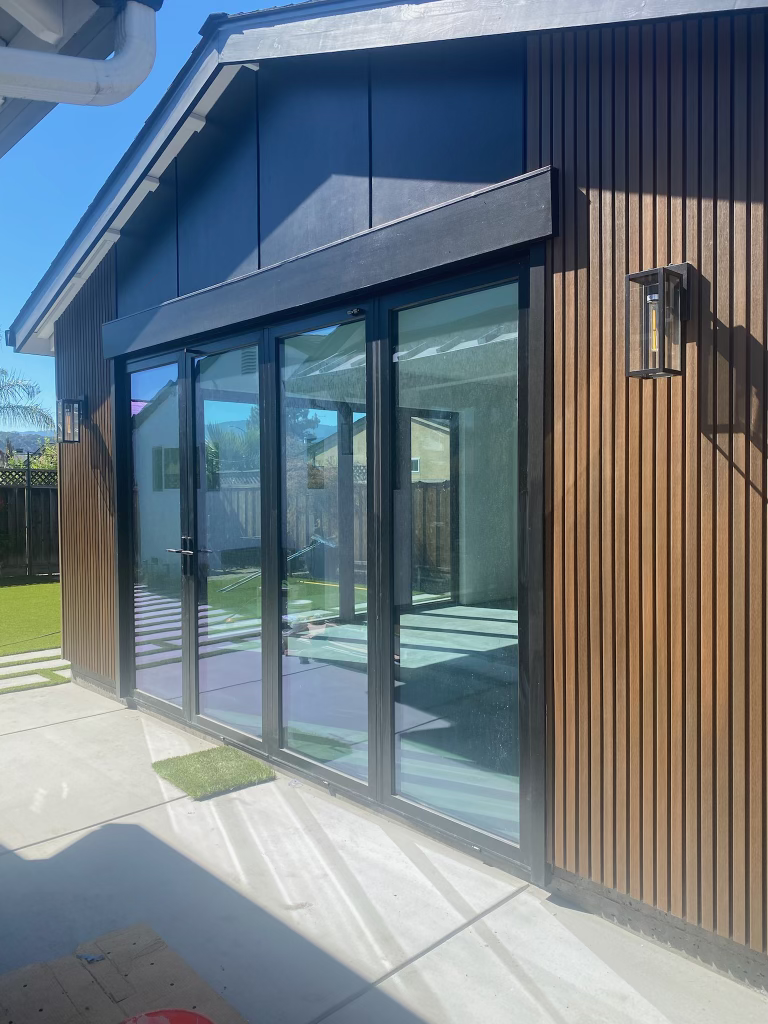
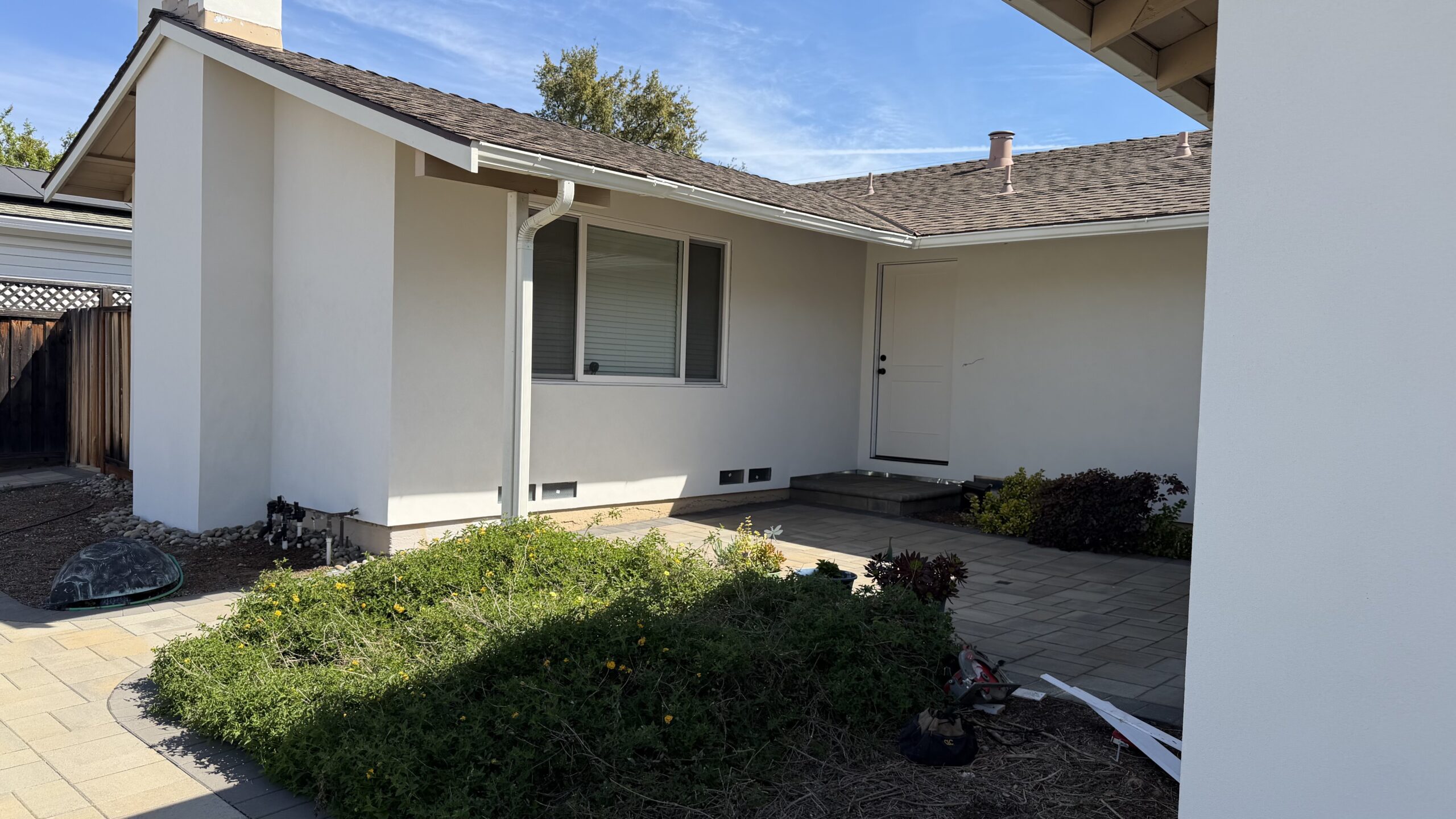
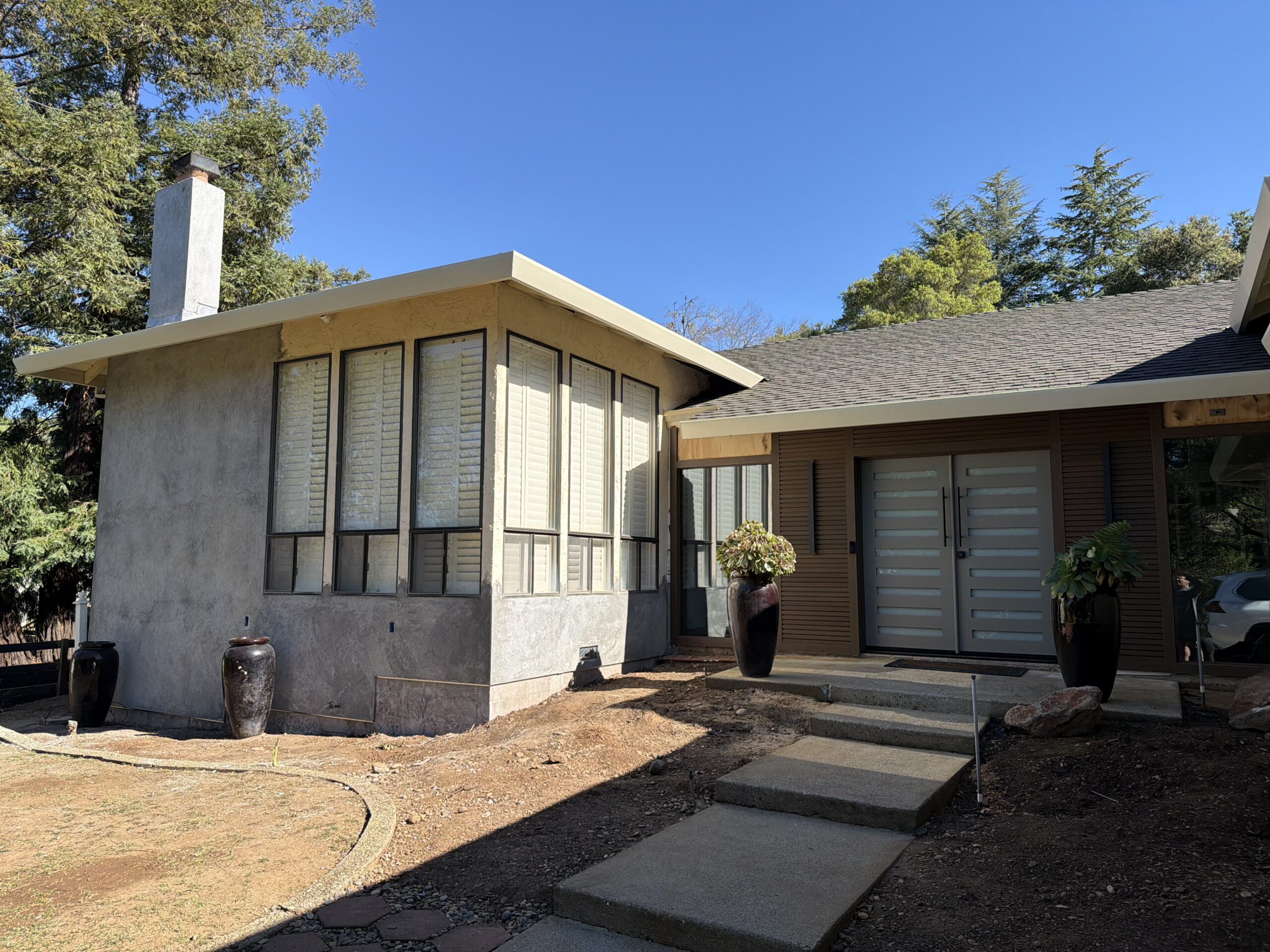
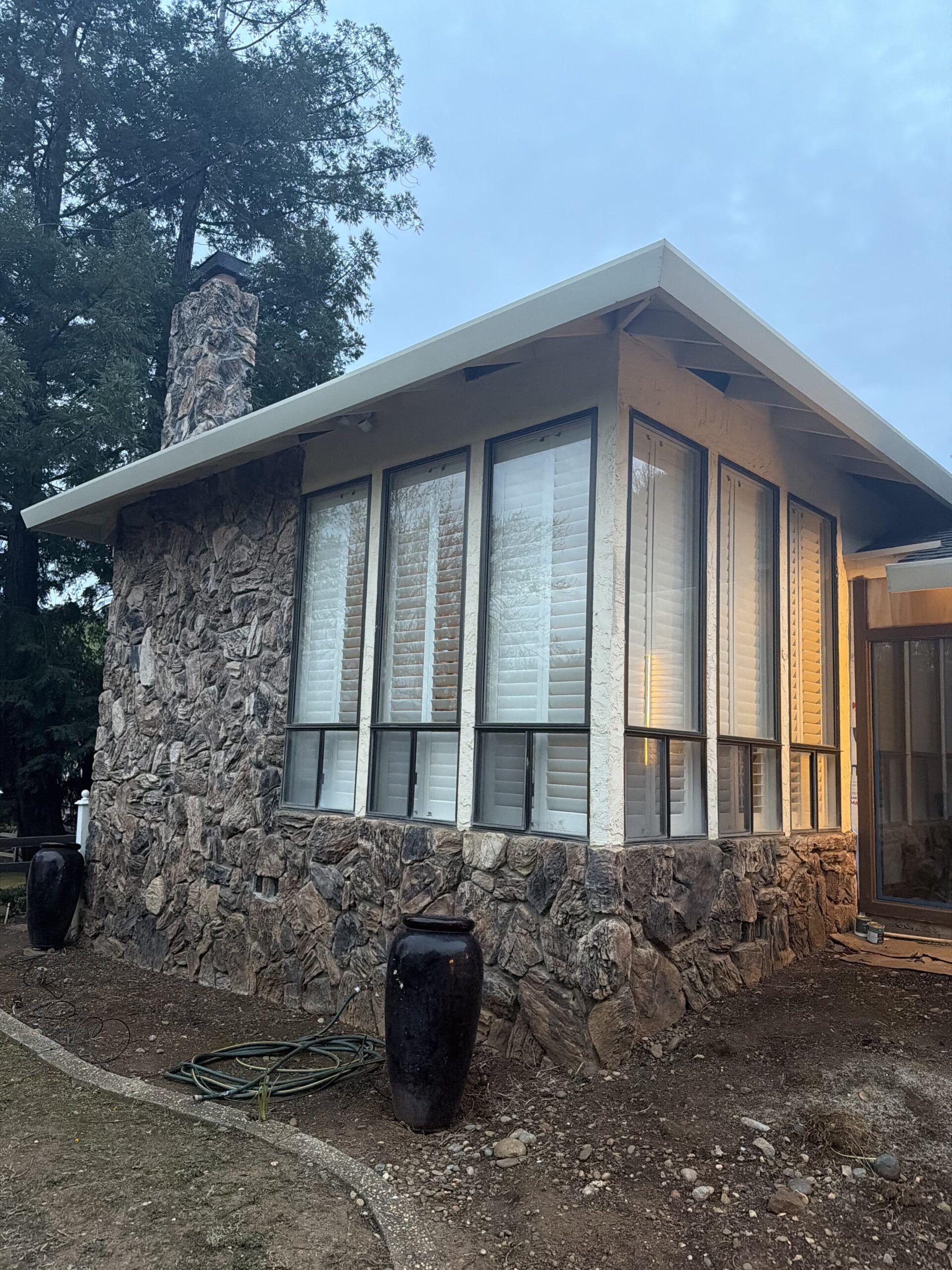
Free Estimates
Free On-Site Consultations
Signs a Building or Project Is Ready for ACM Panel Cladding
Commercial Buildings
- An existing exterior finish that is visually dated, fading, or deteriorated beyond practical repair
- A building being repositioned in the leasing market, where an updated exterior appearance is part of the strategy
- A tenant improvement scope where the storefront or entry facade needs a brand-consistent or contemporary update
- An existing metal cladding system at the end of its service life whose replacement is being planned
- New commercial construction where ACM is specified by the architect or design-build team
Multi-Family and Mixed-Use
- A development project where fire code compliance, low maintenance, and contemporary appearance are all required
- An existing building facade that needs updating to remain competitive in the rental market
- A renovation project where specific elevations are being re-clad as part of a broader building improvement scope
Residential
- A custom home or major renovation where the architect has specified ACM accents or feature elements as part of a contemporary exterior design
- A garage facade, entry feature, or gable element where a contemporary metal panel appearance is the design goal
Our ACM Panel Installation Process
A correctly executed ACM panel installation requires precise layout work, proper attachment system design and execution, and careful attention to joint and transition detailing. Here is how we approach every project from start to finish.
- On-Site Assessment and Consultation: We visit the property to assess the existing substrate condition, building geometry, site access, and any conditions that need to be addressed before installation begins. For commercial projects, we review available drawings and coordinate with the architect or general contractor on scope, schedule, and material specification. This consultation is free with no obligation.
- Material and System Specification: We confirm the panel product, core type, finish specification, color selection, and attachment system approach. For projects where an architect has already specified a product, we work from that specification and coordinate with the manufacturer’s technical team. For projects where the specification is still being developed, we advise on the appropriate product based on building type, code requirements, design intent, and budget.
- Permit Application: ACM panel installation on commercial buildings in San Jose requires a building permit. The permit review process includes confirmation that the specified panel system meets California Building Code requirements for fire performance and exterior cladding. We are familiar with the permitting process for ACM projects and handle the coordination required to move permits through the City of San Jose review process.
- Shop Drawing Review: Shop drawings produced by the panel fabricator lay out panel dimensions, joint locations, attachment point coordinates, corner and edge details, and special conditions for the specific building geometry. We review shop drawings carefully against field conditions before any material is fabricated to identify discrepancies and confirm that all transitions and special conditions are correctly addressed before fabrication begins.
- Substrate Preparation: The substrate behind the panels must be in appropriate condition to accept the attachment system. For renovation projects, this involves assessing and repairing the existing sheathing or substrate, installing blocking at attachment locations where needed, and confirming that the water-resistive barrier is intact or installing a new one. For new construction, we coordinate with the general contractor on substrate readiness before beginning attachment system installation.
- Attachment System Installation: Vertical or horizontal rails, brackets, and associated hardware are installed with precise layout established from control lines set across the building face. Every attachment point is fastened at the correct location and with the correct fastener for the substrate type. Consistent layout at this stage is what produces consistent panel alignment and joint widths throughout the installation.
- Panel Installation: Panels are installed in the sequence specified in the shop drawings, starting from a control point established at the beginning of the installation. Joint widths are maintained consistently throughout using spacers, and panel alignment is checked continuously against the control lines. Cut panels at corners, window surrounds, and building edges are fabricated with returns and edge treatments consistent with the shop drawing details.
- Joint Treatment: Panel joints are treated with open-joint dry gaskets or closed with an appropriate exterior sealant in colors matched or complementary to the panel finish. Sealant application is inspected for continuity, adhesion, and consistent profile throughout the installation.
- Transition and Flashing Details: All transitions at windows, doors, rooflines, grade, and intersections with other cladding systems are completed with appropriate flashing, trim, and sealant details per the project drawings and manufacturer requirements.
- Cleanup and Final Walkthrough: Protective film is removed from all panel faces, the installation is inspected against shop drawings and project specifications, and we walk through the completed work with the client or project team before closing out the scope.
ACM Panel Maintenance
One of the primary reasons ACM panels are so widely specified for San Jose commercial buildings is their minimal ongoing maintenance requirement.
- Surface cleaning: PVDF-finished ACM panels require periodic washing to remove accumulated surface deposits, pollution film, and biological growth. A low-pressure wash with water and a mild detergent restores the panel surface appearance without risk of finish damage. Aggressive pressure washing, abrasive cleaning products, and solvents should be avoided as they can damage the coating.
- Joint inspection: Sealed joints should be inspected annually and resealed wherever sealant has cracked, pulled away, or lost adhesion to the panel face. Joint sealant maintenance is the primary ongoing maintenance task for most ACM installations and should be addressed promptly when deterioration is identified to prevent moisture from reaching the wall assembly behind the panels.
- Finish touch-up: Minor scratches and edge chips on PVDF-finished panels can be touched up with manufacturer-supplied touch-up paint. Touch-up on anodized panels is more limited because the anodizing process cannot be replicated in the field; minor damage on anodized installations is typically accepted as part of the material’s natural aging character.
- Panel replacement: One of the practical advantages of panelized cladding systems is that individual panels can be replaced independently if they are damaged without disturbing the surrounding cladding. This is a meaningful long-term maintenance advantage compared to monolithic cladding systems like stucco, where localized damage often requires patching over a broader area to achieve a consistent appearance.
San Jose Neighborhoods and Areas We Serve
We serve residential and commercial clients throughout San Jose and the broader South Bay from our base at 137 E Saint James St. Our primary service area covers a 20-mile radius of San Jose.
San Jose and Silicon Valley Commercial Locations
- Downtown San Jose and the SoFA District – commercial facade renovation and mixed-use development
- North First Street corridor and Guadalupe River area – tech and commercial office buildings
- El Camino Real and Stevens Creek Boulevard – retail and office facade projects
- Brokaw Road and North San Jose – light industrial and tech campus facilities
- Santana Row area and West San Jose – upscale retail and mixed-use properties
- East San Jose commercial corridors and neighborhood retail centers
- Japantown and the surrounding downtown neighborhoods
Residential Areas
- Willow Glen – contemporary residential renovation and custom infill construction
- Rose Garden and Naglee Park – major renovation projects with contemporary design direction
- Almaden Valley – custom residential and hillside construction
- Cambrian Park, Blossom Hill, and South San Jose
- Berryessa, Alviso, and North San Jose
- Northside, Lakehouse, and Market-Almaden communities
Surrounding Communities
- Saratoga (ZIP 95070) – premium residential and commercial
- Milpitas (ZIP 95035) – residential and commercial
- Evergreen and East San Jose (ZIP 95135)
- Los Gatos, Campbell, Santa Clara, Sunnyvale, and Cupertino
- Fremont and other South Bay communities within 20 miles of San Jose
Why Choose San Jose Stucco & Plastering for ACM Panel Installation
30+ Years of Exterior Wall System Experience- Exterior wall systems are the core of our business. That depth of experience is directly relevant to ACM panel installation, where substrate preparation, attachment system execution, and transition detailing determine how the installation performs over its service life.
Fire-Rated Core as Standard- We specify fire-rated mineral-filled core ACM panels on all commercial exterior projects as a matter of standard practice, not as an upcharge. California Building Code requirements for exterior cladding on commercial buildings are not ambiguous, and we do not cut corners on core specification to reduce material cost.
Shop Drawing Review Before Fabrication- We review shop drawings carefully against field conditions before any panel material is fabricated. Identifying discrepancies at the shop drawing stage costs nothing; identifying them after fabricated panels arrive on site costs time, money, and schedule.
Full Range of Cladding Systems- We install ACM panels alongside the complete range of modern exterior cladding: architectural concrete panels, decorative aluminum panels, metal siding, phenolic and HPL panels, fiber cement, composite wood, rainscreen assemblies, and stucco. Projects that combine ACM with other cladding materials are handled entirely by our crew.
Commercial and Residential Experience- We work in both commercial construction and residential renovation contexts, coordinating with architects, general contractors, and project managers on commercial scopes and working directly with homeowners on residential projects.
Price-Match Guarantee- We will match any competitor’s written estimate. Bring us a written quote from another licensed contractor and we will match it.
Fully Licensed and Insured- All work is performed by our own trained crew under full insurance and California contractor licensing.
Free Estimates and Free On-Site Consultations- We do not charge for project assessments or written estimates. We visit the site, review the project requirements, and give you a thorough, accurate estimate with no obligation.
Frequently Asked Questions About ACM Panel Installation in San Jose
What is the difference between ACM panels and solid aluminum panels? ACM panels consist of two thin aluminum face sheets bonded to a core material, producing a lightweight, rigid panel that is significantly lighter than solid aluminum at equivalent dimensions. Solid aluminum panels are fabricated from a single aluminum sheet and offer greater rigidity and impact resistance at the cost of higher weight. ACM is the more widely specified product for commercial building facades because of its combination of light weight, surface quality, and cost-effectiveness. Solid aluminum panels are more commonly used in high-traffic ground-level applications or where greater impact resistance is specifically required.
Are ACM panels safe to use on buildings in California? Yes, provided the correct core type is specified. Fire-rated ACM panels with mineral-filled cores meet California Building Code Section 1403 requirements for exterior cladding on occupied buildings. Standard polyethylene core ACM panels do not meet these requirements for most commercial applications in California and should not be used as primary exterior cladding on occupied buildings in San Jose. We specify fire-rated core panels on all commercial exterior projects as standard practice.
Do ACM panel installations require permits in San Jose? Yes. Commercial ACM panel installation in San Jose requires a building permit, and the permit review process includes confirmation that the specified panel system meets applicable fire and energy code requirements. We handle permit coordination for commercial projects and are familiar with the City of San Jose building department review process for exterior cladding work.
How long does ACM panel installation take on a commercial building? Project duration depends on building size, facade complexity, site access conditions, and whether the project is phased around occupied tenants. A straightforward single-story commercial storefront or retail facade can typically be completed in one to two weeks. A multi-story office building facade renovation is a larger scope and may run four to eight weeks or more, depending on the extent of the work. We provide a realistic schedule estimate as part of the initial project consultation.
Can ACM panels be installed while a building is occupied? In most cases, yes. ACM panel installation typically occurs on the exterior of the building with limited interior disruption. For multi-tenant commercial buildings, work is generally sequenced to maintain access to building entries and avoid disruption to tenant operations. We discuss schedule and access logistics with property managers and project teams at the outset of every commercial project.
What causes ACM panels to fail prematurely? The most common causes of premature ACM panel failures we see on existing buildings in San Jose are incorrect core specification for the application, inadequate substrate preparation before installation, improper or missing flashing at transitions and penetrations, incorrect fastener type or spacing in the attachment system, and joint sealant that was not maintained after installation. All of these are installation and specification issues, not material deficiencies, which is why contractor selection matters as much as product selection on ACM projects.
Can individual ACM panels be replaced if they are damaged? Yes, and this is one of the practical advantages of panelized cladding systems. Individual panels can typically be removed and replaced without disturbing the surrounding cladding, provided the attachment system is accessible, and the replacement panel can be color-matched to the original finish. Color matching on aged PVDF finishes can be challenging because the original finish will have weathered slightly over time, and the new panel will initially read as a slightly different tone until it weathers to match. We discuss replacement and matching considerations with clients on all panel projects.
How do ACM panels perform in seismic events? Properly engineered ACM panel attachment systems include connections that allow controlled movement between the panel and the building structure during a seismic event. The attachment hardware is designed to accommodate the differential displacement expected in California’s seismic environment without allowing panels to detach from the building. Following a significant seismic event, attachment hardware should be inspected to confirm all connections remain intact and panels have not shifted relative to the attachment system.
Get a Free Estimate for
ACM Panel Installation in San Jose