Fiber Cement Siding Installation
in San Jose, CA
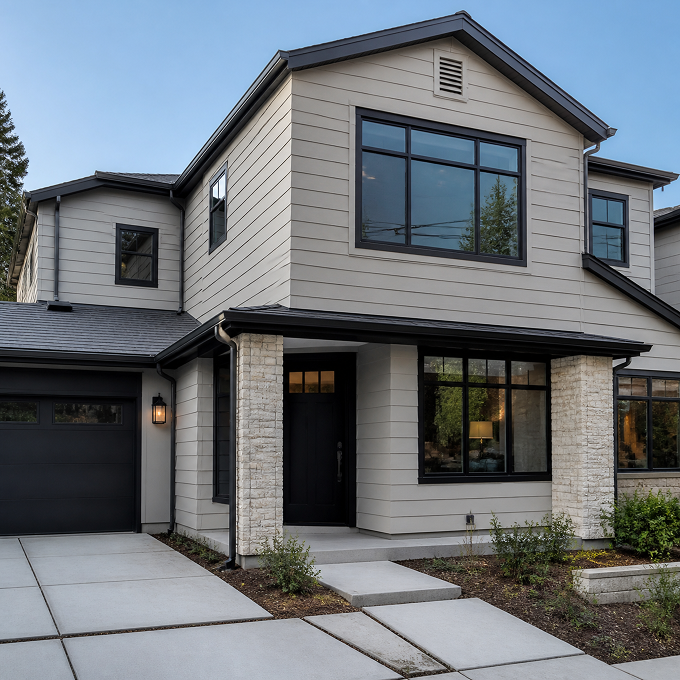
James Hardie & fiber cement siding, installed to spec by San Jose's trusted exterior cladding contractor.
Free Estimates
Free On-Site Consultations
What Is Fiber Cement Siding?
Fiber cement is a composite building material manufactured from Portland cement, sand, and cellulose fibers. The combination produces a product that is dense, dimensionally stable, non-combustible, and highly resistant to moisture, UV, and pest-related issues that cause wood siding to deteriorate over time.
First developed at scale in the 1980s and refined significantly since, fiber cement siding has become the dominant exterior siding material in new residential construction across California and much of the United States. James Hardie Building Products is the market leader, but other manufacturers, including Allura, Nichiha, and GAF, produce competitive fiber cement products that we also install.
Fiber cement is available in a wide range of profiles, including horizontal lap siding, vertical panel siding, shingle siding, and soffit panels. It can be finished with field-applied paint or ordered with a factory-applied finish, and it accepts paint in a way that holds up substantially longer than wood substrates do.
Why Fiber Cement Siding Has Become So Popular in San Jose
San Jose’s housing market includes a large inventory of homes originally sided with wood or stucco systems that were installed decades ago and have reached the end of their service life. For these homeowners, fiber cement offers a compelling combination of durability, low maintenance, aesthetic range, and fire performance that is hard to match with any other single material.
Performance Advantages That Matter in the Bay Area
Moisture resistance: Fiber cement does not absorb water the way wood does. It does not rot, swell, or delaminate from moisture exposure when properly installed and maintained. For San Jose homes that have experienced repeated issues with wood siding failures, particularly on north-facing or shaded elevations, the switch to fiber cement often eliminates recurring maintenance problems entirely.
Dimensional stability: Unlike wood, fiber cement does not move significantly with seasonal changes in temperature and humidity. This stability reduces the risk of paint failure at joints and seams, which is one of the most common maintenance issues with wood siding in California’s climate.
Non-combustibility: Fiber cement carries a Class A fire rating. For homeowners in fire hazard severity zones in Santa Clara County, including portions of Almaden Valley, the foothills above South San Jose, and areas near open space, this is not a minor advantage. It is increasingly a code requirement, and fiber cement satisfies it cleanly.
Pest resistance: Fiber cement is not a food source for termites, woodpeckers, or other pests that commonly damage wood siding in the Bay Area. This alone makes it a significantly lower-maintenance choice for many San Jose homeowners.
Paint retention: Fiber cement holds paint considerably longer than wood. A quality paint system on properly installed and primed fiber cement siding can last 15 years or more before a full repaint is needed on most elevations.
James Hardie Products We Install
James Hardie is the most widely specified fiber cement brand in the industry, and we are experienced installers of their full residential product line. Here is an overview of the products we install most frequently for San Jose homeowners and contractors.
HardiePlank Lap Siding
HardiePlank is the flagship product of the James Hardie line and the most commonly installed fiber cement siding product in California. It is a horizontal lap siding board available in widths from 5.25 inches to 12 inches, in smooth and wood-grain textures, and in lengths up to 12 feet. HardiePlank is available primed for field painting or pre-finished with James Hardie’s factory-applied ColorPlus Technology finish.
HardiePlank installs like traditional lap siding and works well on a wide range of architectural styles, from traditional Craftsman homes in Willow Glen and Naglee Park to contemporary new construction throughout the South Bay.
HardiePanel Vertical Siding
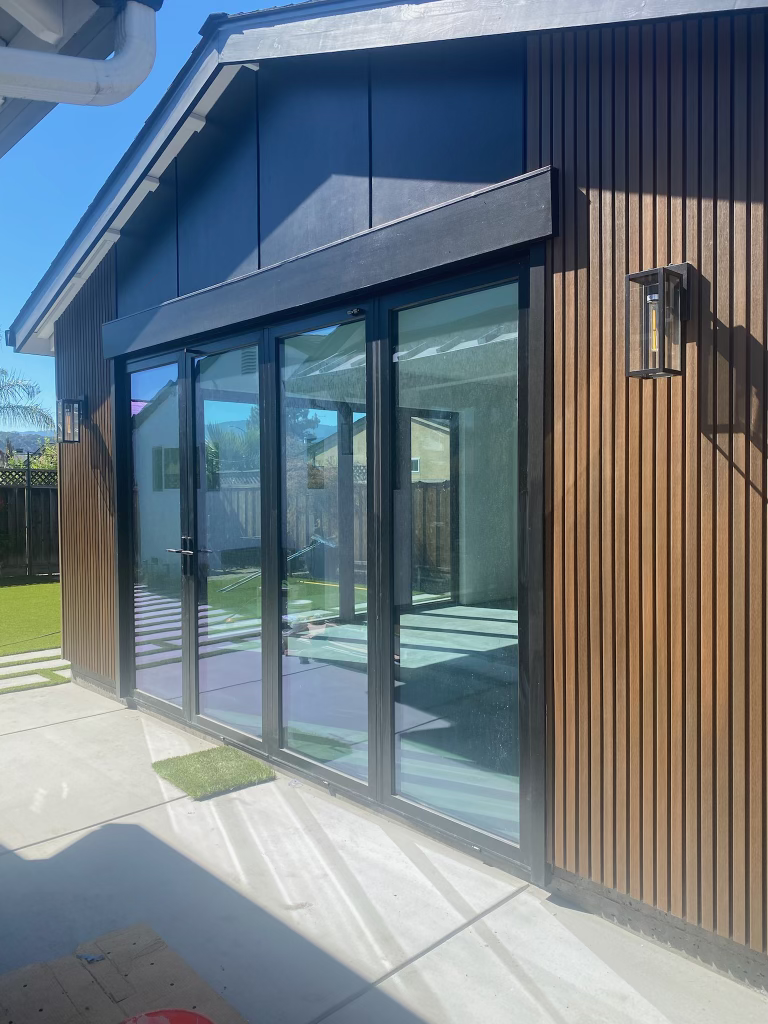
HardiePanel is a large-format vertical siding panel used for board-and-batten applications, contemporary vertical siding configurations, and commercial-adjacent residential projects. Available in smooth and wood-grain textures, HardiePanel panels install vertically and are covered at the seams with HardieTrim batten pieces to create the board-and-batten profile. It is a popular choice for gable ends, accent elevations, and full vertical siding installations on contemporary farmhouse and transitional-style homes throughout San Jose and the surrounding area.
HardieShingle Siding
HardieShingle is a fiber cement product that replicates the look of cedar shingle siding without the rot, split, and maintenance issues that come with real wood shingles. It is available in individual staggered-edge shingles and straight-edge shingle panels, making installation practical at scale while retaining the visual character of hand-applied wood shingles. HardieShingle is frequently used on Craftsman and cottage-style homes throughout San Jose’s older neighborhoods as a durable, lower-maintenance alternative to real wood shingles.
HardieSoffit Panels
HardieSoffit panels replace wood soffit material at eaves, overhangs, and covered entries. They are available in vented and non-vented configurations and in a range of textures to coordinate with other James Hardie siding products. Replacing deteriorated wood soffit with HardieSoffit is often part of a complete fiber cement exterior project and eliminates one of the most moisture-vulnerable details on a home’s exterior.
HardieTrim Boards
HardieTrim fiber cement trim boards are used at corners, windows, doors, rakes, and fascias to provide a consistent, durable trim system that matches the performance profile of the siding. Using HardieTrim alongside HardiePlank or HardiePanel creates a fully fiber cement exterior that eliminates the wood trim rot issues that many San Jose homeowners have experienced on homes with mixed wood and stucco exteriors.
James Hardie ColorPlus Technology
ColorPlus is James Hardie’s factory-applied finish system, available on HardiePlank, HardiePanel, HardieShingle, and HardieTrim products. The finish is applied in a controlled factory environment, baked on for adhesion, and covered by a 15-year limited warranty against fading, peeling, and chipping.
For homeowners who want to minimize ongoing maintenance, ColorPlus is a significant advantage. The factory finish outperforms field-applied paint in adhesion and consistency, and the 15-year warranty provides real protection against the most common paint failure modes. ColorPlus is available in a range of James Hardie’s curated color collections as well as custom color matching to specific paint specifications.
Other Fiber Cement Products We Install
While James Hardie is the most frequently specified fiber cement brand, we also install products from other manufacturers when a project calls for it.
Allura Fiber Cement Siding
Allura produces a competitive line of fiber cement lap siding, panel siding, and trim products. Their products are available in a range of textures and finishes and are sometimes preferred for specific color availability or project budget considerations.
Nichiha Fiber Cement Panels
Nichiha produces large-format fiber cement architectural panels that are popular in commercial and multi-family residential applications. Their panel systems offer a range of contemporary textures and appearances, including products that mimic concrete, stone, and wood grain at a larger scale than traditional lap siding products. For commercial building facade projects in San Jose, Nichiha panels are worth considering as part of a modern cladding specification.
GAF Fiber Cement Siding
GAF entered the fiber cement siding market with a product line aimed at the residential replacement market. Their products are available through select distributors and are an option for projects where availability or lead time makes them preferable to James Hardie.
Free Estimates
Free On-Site Consultations
Signs Your Home Is Ready for Fiber Cement Siding
Some properties are clearly ready for a full exterior cladding replacement. Others are less obvious. Here are the patterns we see most consistently when evaluating homes for fiber cement siding replacement in San Jose.
On Wood-Sided Homes
- Widespread paint failure – peeling, bubbling, or alligatoring across multiple elevations
- Boards that are split, cupped, or pulling away from the wall at the ends
- Rot at the base of siding boards near grade, at window sills, or at horizontal trim surfaces
- Persistent woodpecker damage on any elevation of the home
- Multiple past repair attempts on the same areas with diminishing results
- The homeowner wants to reduce or eliminate the ongoing painting and maintenance cycle
On Stucco-Sided Homes
- Recurring cracks that reopen after repair, particularly around windows and at transitions
- Stucco that sounds hollow when tapped – indicating delamination from the substrate
- Efflorescence at cracks after rain – indicating active water infiltration behind the stucco
- Water staining on interior walls adjacent to exterior elevations
- A desire to change the architectural character of the home from traditional stucco to a contemporary or traditional wood-look profile
On Homes With Mixed or Older Siding Systems
- Original siding material is no longer identifiable or is beyond the point of reasonable repair
- The home is being renovated and the exterior is being updated as part of a broader project
- The homeowner is preparing the property for sale and wants an exterior that is move-in ready and low-maintenance for the next owner
Our Fiber Cement Siding Installation Process
Fiber cement siding installation is not complicated, but it is detail-intensive. James Hardie’s installation guidelines are specific about substrate preparation, fastening patterns, clearances, joint gaps, and flashing requirements. Contractors who skip or abbreviate these steps may produce work that looks correct initially but develops problems within a few years. Here is how we approach every fiber cement installation from start to finish.
- Free On-Site Consultation and Assessment— We visit your property, assess the existing exterior condition, identify any substrate damage or moisture issues that need to be addressed before new siding goes on, and discuss your material and finish preferences. This consultation is free and comes with no obligation.
- Permit Application Where Required— Most fiber cement re-siding projects in San Jose require a building permit, particularly where the water-resistive barrier system is being replaced or where structural sheathing is being repaired. We are familiar with the City of San Jose permitting process and can help you understand what is required for your specific project scope.
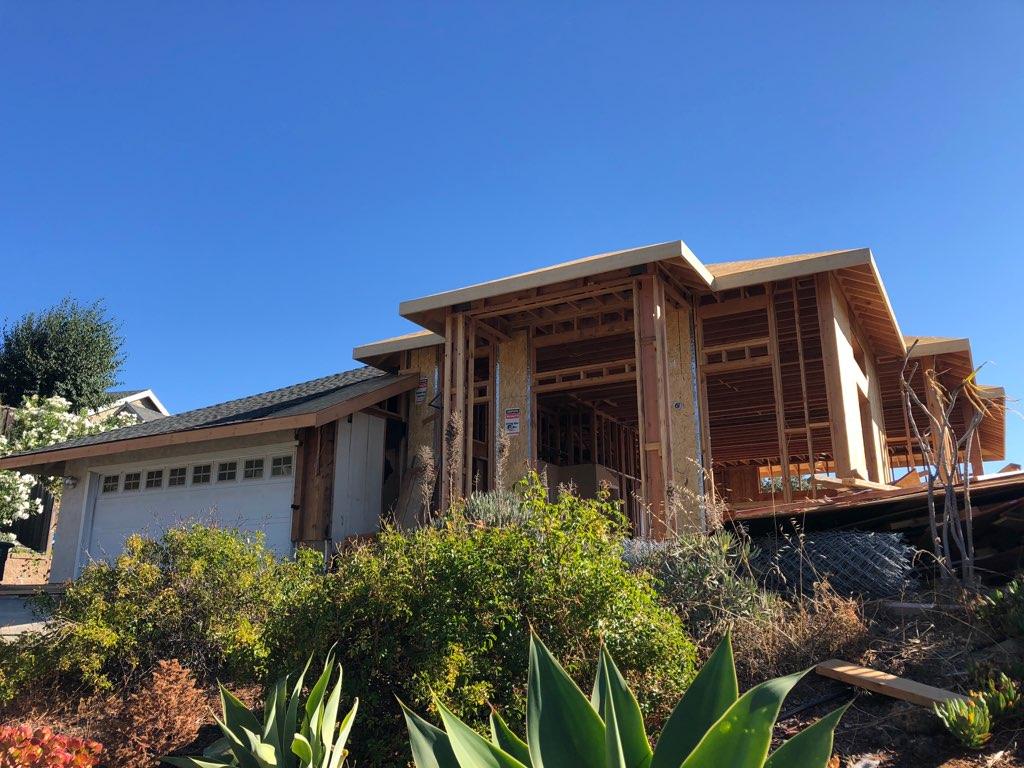
- Removal of Existing Cladding— Existing siding is removed carefully to avoid damage to the underlying sheathing. This step also gives us full access to assess the substrate condition across the entire wall surface, which is not always possible without removing the cladding.
- Substrate Inspection and Repair— Once the existing siding is off, we inspect the sheathing for moisture damage, rot, delamination, or structural issues. Any damaged sheathing is repaired or replaced before the new wall system goes on. This step cannot be skipped; installing new siding over compromised sheathing produces poor results regardless of how good the new material is.
- Water-Resistive Barrier Installation— A new water-resistive barrier (WRB) is installed over the clean sheathing with properly lapped seams and integrated flashing at all window and door openings, penetrations, and transitions. James Hardie’s installation specifications require a specific WRB installation approach, and we follow those requirements on every project.
- Flashing Installation— Correct flashing at windows, doors, horizontal transitions, and wall-to-roof intersections is the most critical detail in any exterior cladding installation. Water that gets past the outer siding layer needs a clear path to drain out of the wall assembly without contacting the sheathing or framing. We install flashing according to James Hardie specifications and applicable building code requirements, and we do not abbreviate this step.
- Fiber Cement Siding Installation— Siding is installed with correct overlap dimensions, proper fastener type and spacing per James Hardie guidelines, expansion gaps at all butt joints and transitions, and minimum clearance from grade, roofing, and other horizontal surfaces. These clearances are specified by James Hardie for moisture management reasons and are required to maintain the product warranty.
- Trim, Corner, and Transition Details— HardieTrim or compatible fiber cement trim boards are installed at corners, windows, doors, rakes, and other transitions. These details are finished with the same care as the field siding, and all joints and penetrations are caulked with an appropriate paintable sealant.
- Priming and Painting, or ColorPlus Touchup— For field-painted installations, all siding and trim surfaces receive a full prime coat followed by two finish coats of a quality exterior paint. For ColorPlus pre-finished products, any cut ends and field touchups are addressed with James Hardie’s supplied touchup paint. Either way, the project leaves with a finished exterior ready for inspection.
- Final Walkthrough We walk the completed project with you, address any questions, and confirm that all work meets both James Hardie specifications and our own quality standards before we close out the job.
Fiber Cement vs. Other Exterior Siding Options
We install a full range of exterior cladding systems and have no reason to favor one over another beyond what is genuinely the best fit for a given project. Here is an honest comparison of fiber cement against the alternatives we most frequently discuss with San Jose homeowners.
Fiber Cement vs. Wood Siding
Wood siding offers natural grain character and depth of texture that fiber cement replicates well but does not fully match. For homeowners who want authentic natural wood and are committed to the maintenance schedule it requires, wood is a legitimate choice. For homeowners who want the look of wood with substantially less ongoing maintenance and better fire performance, fiber cement is generally the more practical choice in the San Jose market. James Hardie’s wood-grain textures are convincing enough that the visual difference is minimal from the street.
Fiber Cement vs. Vinyl Siding
Vinyl siding has a lower upfront cost than fiber cement, but its performance profile in California’s climate is less favorable. Vinyl is susceptible to UV degradation and fading over time, can become brittle in temperature extremes, and does not offer the impact resistance or fire performance of fiber cement. In San Jose’s design-conscious residential market, vinyl is also less commonly specified than it is in other parts of the country. For most South Bay homeowners, fiber cement is the more durable and architecturally appropriate choice.
Fiber Cement vs. Stucco
Stucco and fiber cement serve different aesthetic directions. Stucco is a continuous finish system that produces a smooth or textured monolithic appearance. Fiber cement is an individual-board or panel system that produces a distinctly different visual profile. Many San Jose homes carry a combination of both, with stucco on primary wall planes and fiber cement on gable ends, accent elevations, or specific architectural details. The choice between them is often more about architectural direction than pure performance, and we are experienced with both.
Fiber Cement vs. Composite Wood Cladding
Composite wood cladding products offer a warmer, more natural wood appearance than fiber cement’s wood-grain texture options and are worth considering for projects where authentic wood character is a priority. Composite wood requires slightly more maintenance than fiber cement but substantially less than natural wood. For projects where the architectural goal specifically calls for a natural wood aesthetic, composite wood is worth a serious look alongside fiber cement.
San Jose Neighborhoods and Areas We Serve
We serve residential and commercial clients throughout San Jose and the South Bay from our base at 137 E Saint James St. Our primary service area covers a 20-mile radius of San Jose, including all of the following communities.
San Jose Neighborhoods
- Willow Glen – a high volume of fiber cement replacement work on Craftsman and ranch homes with aging wood or stucco exteriors
- Naglee Park and Roosevelt Park – historic homes where HardieShingle and lap profiles integrate well with period architecture
- Rose Garden – a premium residential area where finish quality and curb appeal are priorities
- Almaden Valley and Blossom Hill – growing demand for board-and-batten HardiePanel installations on contemporary farmhouse renovations
- Cambrian Park and South San Jose – mid-century ranch homes frequently updated with HardiePlank lap siding
- Downtown San Jose, SoFA District, and Japantown – infill residential and mixed-use renovation projects
- East San Jose, Five Wounds, and Olinder neighborhoods
- Berryessa, Alviso, and North San Jose
- Northside, Lakehouse, and Market-Almaden communities
Surrounding Cities and Zip Codes
- Saratoga (ZIP 95070) – premium residential fiber cement installation and full exterior renovation
- Milpitas (ZIP 95035) – residential and light commercial
- Evergreen and East San Jose (ZIP 95135)
- Los Gatos, Campbell, Santa Clara, Sunnyvale, and Cupertino
- Fremont and other South Bay communities within 20 miles of San Jose
Why Choose San Jose Stucco & Plastering for Fiber Cement Siding Installation
30+ Years of Exterior Wall Experience— We are a licensed stucco and exterior cladding contractor with over three decades of experience understanding how buildings are wrapped and how wall systems actually perform. That background is directly relevant to fiber cement installation, where substrate preparation and moisture management details determine how the system holds up over its service life.
Full James Hardie Product Line— We install the complete James Hardie residential product line, including HardiePlank, HardiePanel, HardieShingle, HardieSoffit, and HardieTrim, in both field-primed and ColorPlus pre-finished configurations. We follow James Hardie’s installation guidelines on every project to protect your product warranty and ensure the installation performs as intended.
Correct Installation Details – Every Time— Back-priming cut ends. Correct fastener type and spacing. Proper clearances from grade and roofing. Correct expansion gaps at all joints. Integrated WRB and flashing at all openings and transitions. These are the details that separate a fiber cement installation that lasts 30 years from one that starts showing problems in five. We do not skip them.
Full-Service Exterior Contractor— Beyond fiber cement siding, we install composite wood cladding, metal panels, ACM, phenolic, and HPL systems, rainscreen assemblies, and architectural concrete panels. We also perform stucco work, stucco repair, EIFS systems, fireproofing, lathing, sandblasting, and exterior painting. Projects that require more than one cladding system are handled entirely by our crew without subcontracting to a separate painting or stucco contractor.
Price-Match Guarantee— We will match any competitor’s written estimate. Get multiple quotes and bring us the best one.
Fully Licensed and Insured— All work is performed by our own trained crew under full insurance and California contractor licensing.
Free Estimates and Free On-Site Consultations— We do not charge for your time, and we do not pressure you into a quick decision. We assess your project thoroughly and give you a written estimate you can evaluate at your own pace.
Frequently Asked Questions About Fiber Cement Siding Installation in San Jose
Is James Hardie siding worth it for Bay Area homes? For most San Jose homeowners, replacing aging wood or stucco siding, yes. The combination of low maintenance, fire performance, dimensional stability, and long paint life makes fiber cement a genuinely compelling choice for the Bay Area climate and regulatory environment. The upfront cost is higher than vinyl and roughly comparable to quality wood installation, but the long-term maintenance cost is substantially lower than either.
Does fiber cement siding require a lot of maintenance? Compared to wood siding, significantly less. A quality paint system on properly installed fiber cement siding typically lasts 12 to 15 years before a full repaint is needed. James Hardie ColorPlus pre-finished products carry a 15-year warranty against fading and peeling, which extends the maintenance interval further. Annual inspection for caulk condition and minor touchups is a reasonable ongoing maintenance practice.
Do I need a permit for fiber cement siding installation in San Jose? In most cases, yes. Re-siding projects in San Jose that involve removal of existing cladding, replacement of the water-resistive barrier, or repair of structural sheathing typically require a building permit. We are familiar with the permit process and can help you understand what is required for your specific project.
How long does fiber cement siding installation take? A standard single-family home re-siding project in San Jose typically takes one to two weeks from demolition through final paint, depending on the size of the home, the complexity of the trim details, and the finish system being used. Projects involving significant substrate repair or complex architectural details may take longer. We provide a realistic schedule estimate as part of the initial consultation.
Can fiber cement siding be installed over existing stucco? In some cases, but we generally recommend against it unless a thorough assessment confirms the existing stucco is firmly adhered, the substrate is in good condition, and the installation can meet all clearance and flashing requirements with the added wall thickness. In most situations, removing the existing stucco gives us the opportunity to inspect and repair the substrate, install a fresh water-resistive barrier, and execute the flashing details correctly – producing a better long-term result.
What is the difference between James Hardie and other fiber cement brands? James Hardie is the market leader and has the most established track record, the broadest product line, and the most detailed installation documentation of any fiber cement manufacturer. They also offer the ColorPlus factory-applied finish system, which other brands do not match exactly. Competing products from Allura, Nichiha, and GAF are legitimate alternatives and may be preferable in certain situations based on availability, color options, or specific project requirements. We work with all of these brands and can give you an honest assessment of the trade-offs for your specific project.
What James Hardie color options are available? James Hardie offers ColorPlus pre-finished products in a curated palette of colors organized into regional collections. Their Smooth and Cedarmill texture lines are available in a range of neutral, warm, cool, and deep tones. Field-painted installations are not limited to James Hardie’s palette and can be finished in any exterior paint color. We can walk you through the ColorPlus options and discuss color selection as part of the material consultation.
Do you install fiber cement siding on commercial buildings? Yes, for appropriate commercial applications. James Hardie products are commonly used on smaller commercial buildings, mixed-use residential projects, and light commercial construction. For larger commercial facade applications, larger-format products from Nichiha or panel systems from other manufacturers may be more appropriate, and we install those as well.
What clearances does fiber cement siding require from grade and roofing? James Hardie specifies a minimum 6-inch clearance between the bottom of the siding and finished grade, and a minimum 1-inch clearance from roofing surfaces at horizontal intersections. These clearances are required to prevent moisture from wicking into the bottom of the siding boards and to maintain the product warranty. Properties where the existing grade or landscaping does not provide adequate clearance may need grading adjustments as part of the installation scope.
Get a Free Estimate for
Fiber Cement Siding Installation in San Jose