Composite Wood Cladding Installation
in San Jose, CA
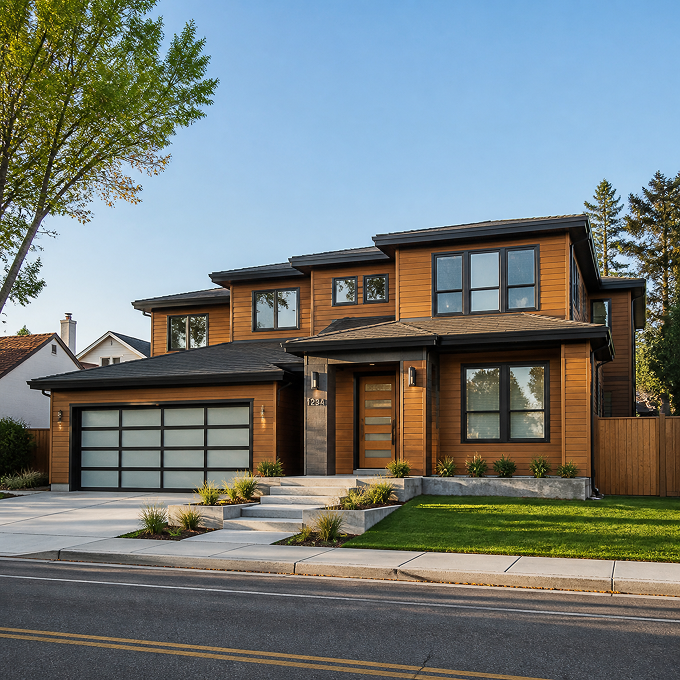
Composite Wood Cladding Installed by San Jose's Experienced Exterior Contractor
Free Estimates
Free On-Site Consultations
What Is Composite Wood Cladding?
Why Composite Wood Cladding Makes Sense for Bay Area Properties
The Bay Area’s climate has a specific relationship with natural wood siding that makes composite products a compelling alternative for many San Jose homeowners. Understanding that relationship is the starting point for understanding why composite wood cladding has gained the market share it has in the South Bay.
The Problem With Natural Wood in San Jose’s Climate
Natural wood siding performs well in dry, stable environments. San Jose’s climate is not that. The city’s Mediterranean pattern delivers concentrated seasonal rainfall followed by an extended dry period, creating a moisture cycling environment that causes natural wood to expand, contract, and move repeatedly through the year. That movement opens and closes joints between boards, works paint films loose at edges and laps, and over time degrades the continuous protective coating that keeps moisture out of the wood substrate.
Add to this the UV exposure that south and west-facing elevations in San Jose receive year-round, and the picture becomes clear: natural wood siding in the Bay Area requires a consistent, attentive maintenance program to hold up over the long term. A paint job on natural wood siding in San Jose that was executed correctly may need attention again in seven to ten years on protected elevations, and sooner on those facing south and west. Homeowners who do not keep up with that schedule reliably find themselves facing rot, split boards, and significant repair costs.
What Composite Wood Changes
Composite wood cladding is specifically engineered to address the moisture and UV challenges that make natural wood maintenance-intensive in the Bay Area. The manufacturing process seals the wood fiber content within a moisture-resistant binder that prevents the substrate absorption that drives movement, paint failure, and rot in natural lumber. The dimensional stability of composite products is substantially greater than natural wood, meaning that joints and laps remain tighter over the life of the installation rather than opening up with seasonal cycling.
For San Jose homeowners who want the look of wood siding without committing to the maintenance schedule that natural wood requires in this climate, composite wood is the most honest product recommendation available.
Composite Wood Cladding Products We Install
The composite wood cladding market includes products from several established manufacturers, each with specific performance characteristics, profile options, and finish systems. We work with the leading products in the category and can advise on the appropriate choice for a given project based on the architectural goals, performance requirements, and installation context.
LP SmartSide
LP SmartSide is one of the most widely specified composite wood siding products in California and the product we install most frequently for San Jose residential clients. It is manufactured from oriented strand board (OSB) strands treated with a zinc borate preservative and bonded with a thermosetting resin, producing a substrate that resists fungal decay, termite damage, and moisture penetration while retaining the workability of natural wood.
LP SmartSide is available in a comprehensive range of profiles including lap siding in multiple widths, vertical panel siding for board-and-batten applications, trim boards, fascia, and soffit panels. The surface texture closely replicates natural wood grain, and the product accepts paint in a manner that is functionally identical to natural wood. It carries a 50-year limited warranty against fungal decay and termite damage, which is a meaningful long-term assurance that natural wood cannot provide.
Allura Composite Siding
Allura produces a composite siding line that competes directly with LP SmartSide in the residential replacement market. Their products are available in lap and panel configurations with realistic wood-grain surface textures and are compatible with standard exterior paint systems. For projects where LP SmartSide is not available through local supply channels or where a specific profile or color availability makes Allura the better fit, it is a viable alternative.
Boral TruExterior Siding and Trim
Boral TruExterior is a composite siding product based on a fly ash and polymer blend rather than a wood fiber matrix. The result is a product with essentially zero water absorption, making it one of the most moisture-resistant composite siding products available. TruExterior is available in beaded and smooth lap profiles, panel siding, trim boards, and specialty millwork profiles. For projects in San Jose locations with elevated moisture exposure, including bay-adjacent areas and north-facing elevations on shaded sites, TruExterior’s near-zero water absorption is a specific performance advantage worth evaluating.
Azek and TimberTech Exteriors
Azek produces a cellular PVC exterior trim and siding line that offers essentially complete moisture immunity at the cost of a slightly more synthetic appearance than wood fiber-based composites. It is most commonly used for trim boards, corner boards, and specialty millwork applications where moisture resistance at exposed edges and end grain locations is a priority. As a trim component paired with fiber cement or wood fiber composite field siding, Azek trim is a common specification on San Jose residential re-siding projects where long-term trim performance is a concern.
Cedral and European Composite Cladding Products
Several European manufacturers, including Cedral, produce fiber cement and composite cladding systems that incorporate wood fiber and cementitious binders for use in ventilated facade applications. These products are increasingly available through specialty distributors in the Bay Area and are worth evaluating for projects where a European design sensibility or specific performance profile aligns with the project requirements.
Composite Wood Cladding Profiles and Applications
One of the practical strengths of composite wood cladding is the range of profiles available across the product lines we install. Architectural style compatibility is a real consideration for San Jose homeowners, particularly in neighborhoods where visual harmony with surrounding properties matters, and the profile options available in composite wood cover most of the common residential siding styles found in the South Bay.
Horizontal Lap Siding
Horizontal lap siding is the most widely installed siding profile in American residential construction and the configuration that most San Jose homeowners are replacing when they re-side an existing home. Composite lap siding is available in widths from 4 inches to 12 inches, with narrower widths reading as more traditional and appropriate for Craftsman and period-adjacent styles in neighborhoods like Willow Glen and Naglee Park, and wider widths reading as more contemporary and appropriate for ranch homes and transitional residential styles throughout the South Bay.
Board-and-Batten
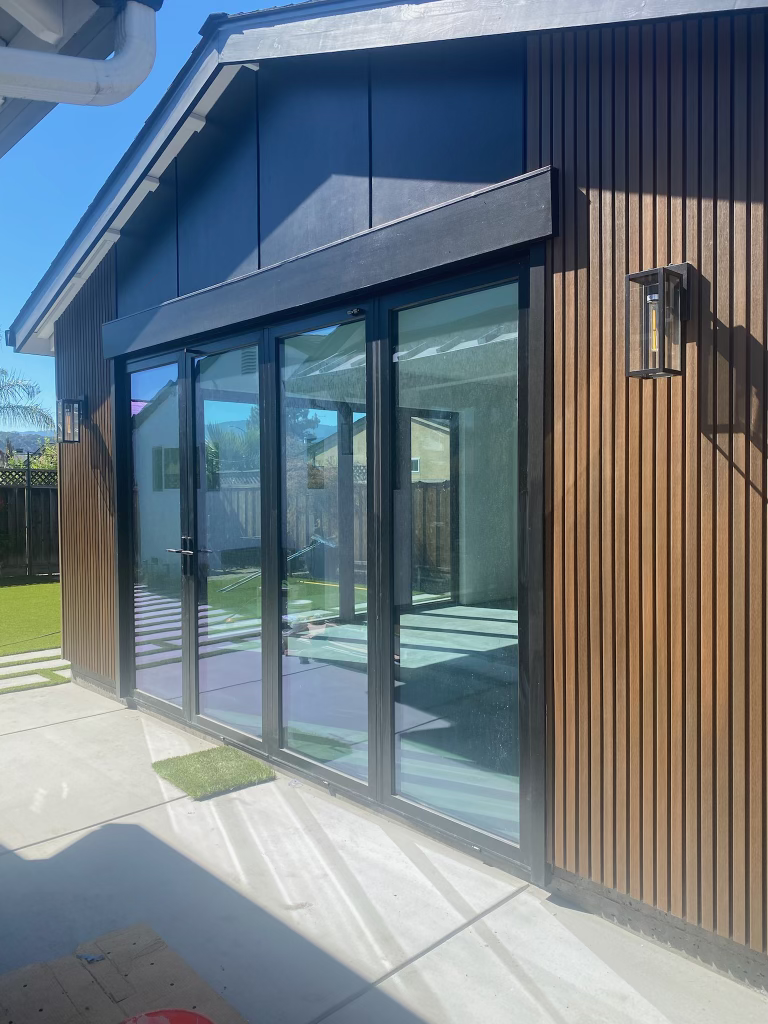
Board-and-batten is a vertical siding configuration where wide boards are installed with narrow batten strips covering the vertical joints between them. It is closely associated with farmhouse, barn, and contemporary rural architecture and has become one of the most requested exterior profiles for new construction and renovation projects across San Jose, particularly in Almaden Valley, Blossom Hill, and South San Jose where newer homes with rural-modern or contemporary farmhouse aesthetics are common. LP SmartSide panel siding with batten trim replicates this profile cleanly and performs significantly better than natural wood in the same configuration.
Shiplap and Nickel Gap
Shiplap siding boards interlock at their edges with a rabbet joint, creating a tight horizontal profile with a consistent reveal and a subtle shadow line between courses. Nickel gap is a variation that uses a small spacer to create a slightly wider, more pronounced gap between boards. Both profiles have broad appeal in contemporary design and are frequently specified on contemporary farmhouse and transitional residential renovation projects throughout San Jose. In composite wood, both profiles install cleanly and hold their joint geometry more consistently than natural wood over the seasonal moisture cycling San Jose’s climate delivers.
Beaded Siding
Beaded lap siding incorporates a small radius bead along the bottom edge of each board, adding visual detail and a slightly more formal character than plain lap siding. It is appropriate for traditional and Craftsman residential styles and is a common profile on restoration and renovation projects in San Jose’s older neighborhoods where architectural character is a priority.
Panel Siding
Large-format vertical panel siding in composite wood products, typically available in 4×8 and 4×9 sheet sizes, installs quickly on straightforward wall surfaces and is a cost-effective option for ADU construction, garage cladding, and secondary structures where large panel coverage is practical. Panel siding in composite wood can be used as a standalone profile or as the field material in a board-and-batten application.
Free Estimates
Free On-Site Consultations
Composite Wood vs. Natural Wood vs. Fiber Cement
These three products represent the primary options for homeowners in San Jose who want a wood-look exterior siding system. Each has legitimate strengths, and the right choice depends on the specific project context, the homeowner’s maintenance tolerance, and the architectural goals.
Composite Wood vs. Natural Wood
Natural wood has one advantage that composite wood does not fully replicate: the depth and variation of genuine grain that comes from a solid timber. Stain penetrates natural wood differently than it penetrates composite wood, and for homeowners who want a deeply stained, natural wood appearance, solid cedar or redwood is the only product that delivers it fully. For every other consideration in the San Jose market, composite wood outperforms natural wood. It requires less maintenance, it holds paint longer, it resists moisture and pests without chemical treatment, and it carries manufacturer warranties that natural wood cannot offer.
Composite Wood vs. Fiber Cement
Fiber cement and composite wood are both low-maintenance alternatives to natural wood, but they occupy slightly different positions in the product landscape. Fiber cement, particularly James Hardie products, is non-combustible and offers Class A fire ratings, which is a meaningful advantage for properties in fire hazard severity zones in Santa Clara County. It is also slightly harder and more impact-resistant than most composite wood products. Composite wood accepts stain more convincingly than fiber cement does and works with standard carpentry tools in a way that feels more natural to tradespeople accustomed to wood construction. For projects where fire performance is not a constraint and a warmer wood character is the aesthetic goal, composite wood is worth serious consideration alongside fiber cement.
When Composite Wood Is the Right Choice
- The architectural goal is a natural wood appearance that fiber cement’s texture does not fully satisfy
- The project is in a neighborhood like Willow Glen or Naglee Park where a warmer, more natural-looking exterior is consistent with the surrounding homes
- The homeowner wants reduced maintenance relative to natural wood but prefers composite wood’s workability and staining characteristics over fiber cement
- The project is not in a fire hazard severity zone where non-combustible cladding is required
- The design calls for a board-and-batten, shiplap, or beaded profile where composite wood’s range of options and clean installation characteristics are an advantage
Signs Your Home Is Ready for Composite Wood Cladding
On Natural Wood-Sided Homes
- Widespread paint failure with peeling, bubbling, or cracking across multiple elevations
- Boards that are split, cupped, or pulling away from the wall at the ends and laps
- Soft spots at board ends, base courses, window sills, and horizontal trim surfaces indicating rot
- Persistent woodpecker damage on any elevation
- A homeowner who has maintained natural wood siding for years and is ready to reduce the ongoing maintenance commitment
- Repeated repair cycles on the same areas with diminishing results
On Stucco-Sided Homes
- Recurring cracks that reopen after repair, particularly at windows, doors, and wall transitions
- Stucco that sounds hollow when tapped, indicating delamination from the substrate
- Interior water staining on walls adjacent to exterior elevations
- A desire to change the architectural character of the home from stucco to a contemporary or traditional wood-profile exterior
On Homes With Other Existing Cladding
- Existing siding that is warped, buckled, or beyond practical repair
- A full exterior renovation where the existing cladding material is being replaced as part of a broader project
- A home being prepared for sale where updated, low-maintenance exterior siding is part of the improvement scope
Our Composite Wood Cladding Installation Process
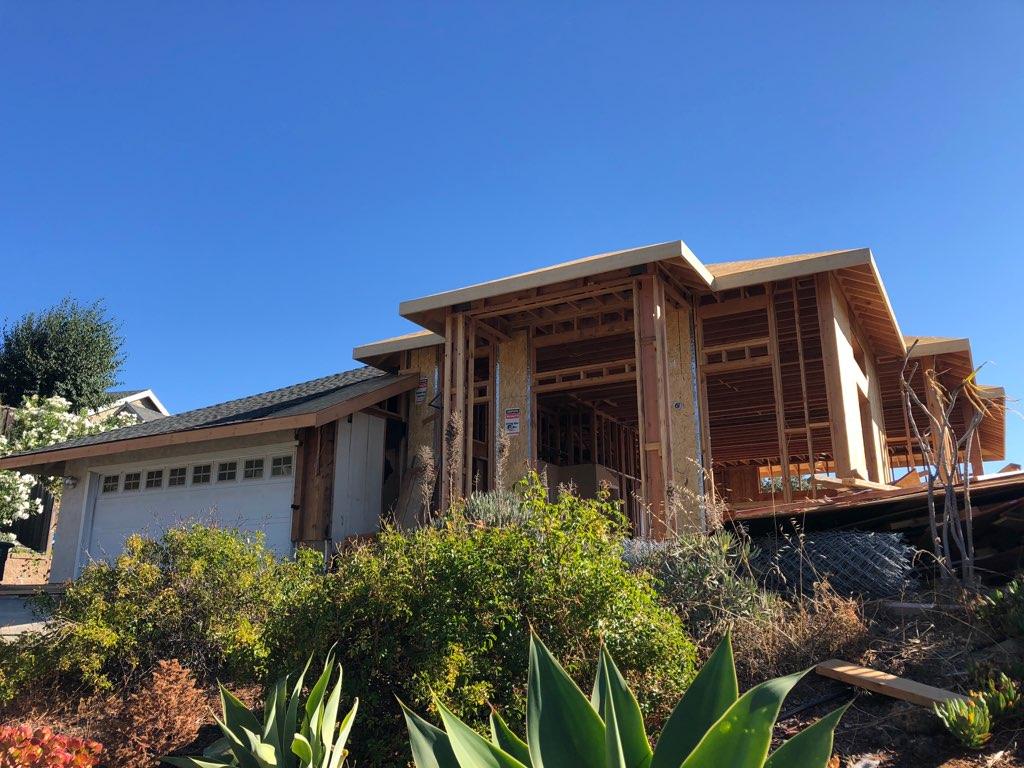
Installing composite wood cladding correctly requires the same substrate preparation discipline and flashing detail work that any high-quality exterior cladding installation demands. The product’s performance over time is directly tied to how well the installation is executed from the substrate back.
- Free On-Site Consultation and Assessment- We visit the property to assess the existing exterior condition, identify any substrate damage or moisture issues that need to be addressed before new cladding goes on, and discuss the profile, finish, and performance options that make sense for the specific project. There is no charge for this consultation and no obligation.
- Material and Profile Selection- Based on the home’s architecture, the neighborhood context, and the homeowner’s maintenance preferences and aesthetic goals, we walk through the composite wood products and profiles appropriate for the project. We explain the practical differences between LP SmartSide, Boral TruExterior, and other products so the selection is based on real performance information rather than marketing.
- Permit Application- Residing projects in San Jose that involve removal of existing cladding, replacement of the water-resistive barrier, or repair of structural sheathing typically require a building permit. We handle permit coordination and are familiar with the City of San Jose review process for exterior wall work.
- Removal of Existing Cladding- Existing siding is removed carefully to preserve sheathing where possible. Removal also gives us full access to inspect the substrate condition across the entire wall surface, which is not reliably possible without taking the cladding off.
- Substrate Inspection and Repair- The sheathing is inspected for moisture damage, rot, delamination, and structural issues. Any compromised material is repaired or replaced. Installing new composite cladding over damaged or wet sheathing produces poor results regardless of how good the new material is, and we do not proceed past this stage until the substrate is in appropriate condition.
- Water-Resistive Barrier and Flashing Installation- A continuous water-resistive barrier is installed over the clean sheathing with properly lapped and taped seams and fully integrated flashing at all window openings, door openings, penetrations, and wall transitions. This layer is the primary moisture management element of the wall assembly, and its installation quality directly determines how the system performs over its service life.
- Furring Installation (Where Rainscreen Assembly Is Specified)- For projects where a rainscreen cavity is being incorporated, vertical furring strips are installed over the WRB to create the drainage and drying plane before cladding installation begins. We recommend rainscreen assemblies on projects where the site’s moisture history or exposure level suggests that a ventilated cavity would provide meaningful long-term benefit.
- Back-Priming- Every piece of composite wood cladding we install is back-primed before it goes on the wall. Back-priming seals the back face and end cuts against moisture absorption and is one of the most effective steps available for extending the service life of a painted composite wood installation. It is also a requirement of most composite wood manufacturer warranties. We do not skip it.
- Siding Installation- Siding is installed according to manufacturer specifications, with correct overlap dimensions, appropriate fastener type and spacing, expansion gaps at all butt joints and transitions, and correct minimum clearances from grade, roofing, and other horizontal surfaces. These details are specified by the manufacturer for moisture management reasons and are required to maintain the product warranty.
- Trim, Corner, and Transition Details- Corner boards, window and door trim, rake and fascia boards, and transitions to other cladding materials are installed with the same care as the field siding. All joints and penetrations are caulked with a paintable exterior-grade sealant appropriate for the composite wood product being used.
- Priming and Painting- All siding and trim surfaces receive a full prime coat followed by a quality exterior finish coat. End cuts exposed in the field receive touch-up primer before caulking. Finish coats are applied to manufacturer specifications for the specific composite wood product.
- Final Walkthrough- We walk through the completed project with you before closing out the job and address any questions about the installation, warranty documentation, and ongoing maintenance.
Composite Wood Cladding Maintenance
One of the primary reasons San Jose homeowners choose composite wood over natural wood is the reduced maintenance commitment. That reduction is real, but composite wood is not maintenance-free, and being clear about what it requires is part of giving honest guidance.
Painting: Composite wood cladding holds paint longer than natural wood in San Jose’s climate. A well-executed paint job on properly installed and primed composite wood can be expected to last 12 to 15 years on most elevations before a full repaint is needed, compared to 7 to 10 years for natural wood in the same conditions. South and west-facing elevations will show wear sooner than protected north and east-facing elevations.
Caulk inspection: Caulk at butt joints, corner details, and window and door surrounds should be inspected annually and reapplied wherever it has cracked, pulled away, or otherwise failed. Caulk maintenance is a minor task but an important one, as failed caulk allows moisture to enter the wall assembly at the most vulnerable points.
Clearances: The minimum clearances specified by composite wood manufacturers between the bottom of the siding and grade, roofing, and other horizontal surfaces must be maintained throughout the life of the installation. Mulch, soil, and vegetation that creeps up against the base of composite wood siding over time increases moisture exposure at the most vulnerable location on the installation.
General inspection: Annual visual inspection for paint condition, caulk integrity, and any areas of discoloration or surface damage allows minor issues to be addressed before they become larger problems.
San Jose Neighborhoods and Areas We Serve
We serve residential and commercial clients throughout San Jose and the broader South Bay from our base at 137 E Saint James St. Our primary service area covers a 20-mile radius of San Jose.
San Jose Neighborhoods
- Willow Glen – a high volume of composite wood cladding work on Craftsman and ranch homes where a natural wood appearance is a priority
- Naglee Park and Roosevelt Park – historic character homes being re-clad with wood-profile composite products
- Rose Garden – premium residential area where finish quality and architectural character matter
- Almaden Valley and Blossom Hill – board-and-batten composite wood is a common choice on contemporary farmhouse renovations in this area
- Cambrian Park and South San Jose – mid-century ranch homes updated with horizontal lap composite siding
- Downtown San Jose, SoFA District, and Japantown – infill residential and renovation projects
- East San Jose, Five Wounds, and Olinder neighborhoods
- Berryessa, Alviso, and North San Jose
- Northside, Lakehouse, and Market-Almaden communities
Surrounding Cities and Zip Codes
- Saratoga (ZIP 95070) – premium residential composite wood cladding installation
- Milpitas (ZIP 95035) – residential and light commercial
- Evergreen and East San Jose (ZIP 95135)
- Los Gatos, Campbell, Santa Clara, Sunnyvale, and Cupertino
- Fremont and other South Bay communities within 20 miles of San Jose
Why Choose San Jose Stucco & Plastering for Composite Wood Cladding Installation
30+ Years of Exterior Wall System Experience- Exterior wall systems are our core business, and that includes a thorough understanding of how cladding products perform in the Bay Area’s specific climate. We have seen what happens when substrate preparation is shortcut, when back-priming is skipped, and when flashing details are executed carelessly. Those failures inform how we approach every project.
Honest Material Guidance- Composite wood is not the right choice for every project. If your property is in a fire hazard severity zone where non-combustible cladding is required, we will tell you that upfront and explain the alternatives. If fiber cement better fits your project’s performance requirements, we will say so. Our goal is a good long-term outcome for the project, not a fast material sale.
Back-Priming and Proper Preparation on Every Project- The details that extend the service life of composite wood cladding are the ones most commonly skipped on lower-cost installations. We back-prime every board, prepare substrates correctly, and execute flashing details to manufacturer specifications on every project regardless of scope.
Full-Service Exterior Contractor- Beyond composite wood cladding, we install fiber cement, metal panels, ACM, phenolic and HPL systems, architectural concrete panels, rainscreen assemblies, and stucco. Projects that require composite wood cladding on some elevations and stucco or other systems on others are handled entirely by our crew without multiple contractor coordination.
Price-Match Guarantee- We will match any competitor’s written estimate. Bring us a written quote from another licensed contractor and we will match it.
Fully Licensed and Insured- All work is performed by our own trained crew under full insurance and California contractor licensing.
Free Estimates and Free On-Site Consultations- We do not charge for project assessments or written estimates. We visit the site, assess the existing exterior, and give you a thorough, accurate estimate with no obligation.
Frequently Asked Questions About Composite Wood Cladding in San Jose
How long does composite wood cladding last in the Bay Area? With proper installation, back-priming, and consistent maintenance, quality composite wood cladding products like LP SmartSide are warranted by the manufacturer for 50 years against fungal decay and termite damage. Real-world service life in San Jose’s climate is consistent with that range for correctly installed and maintained systems. The biggest variables are installation quality, paint system quality, and how consistently caulk and paint maintenance is addressed over time.
Can composite wood cladding be stained rather than painted? Some composite wood products accept semi-transparent stain, but not all do, and the staining performance of composite wood does not match that of natural wood because the binder matrix limits how deeply stain can penetrate the substrate. LP SmartSide, for example, is designed primarily for paint and does not stain the way natural cedar or redwood does. If a deeply stained natural wood appearance is the specific goal, natural wood is the more appropriate material choice, and we discuss this honestly during the material selection conversation.
Is composite wood cladding fire-rated? Most wood fiber-based composite cladding products, including LP SmartSide, are combustible and do not carry a Class A fire rating. For properties in Very High Fire Hazard Severity Zones in Santa Clara County, including portions of Almaden Valley, the foothills above South San Jose, and other hillside areas, non-combustible cladding may be required by local or state fire codes. We identify any applicable fire code requirements for your property during the consultation. If non-combustible cladding is required, fiber cement, metal panels, or other Class A products are the appropriate alternatives.
What is the difference between LP SmartSide and fiber cement siding? LP SmartSide is a wood fiber-based composite that accepts paint and stain similarly to natural wood and works with standard carpentry tools. Fiber cement, including James Hardie products, is a cement-sand-cellulose composite that is non-combustible, slightly harder and more impact-resistant, and holds paint somewhat longer than LP SmartSide. Fiber cement does not accept stain as naturally as composite wood and has a slightly more uniform surface texture. For projects where fire performance is a priority, fiber cement is the stronger choice. For projects where natural wood character and workability are priorities and fire code does not require non-combustible cladding, composite wood is a legitimate alternative.
Do I need a permit for composite wood cladding installation in San Jose? In most cases, yes. Re-siding projects in San Jose that involve removal of existing cladding, replacement of the water-resistive barrier, or repair of structural sheathing require a building permit. We are familiar with the permitting process and handle permit coordination for our projects.
How long does composite wood cladding installation take? A standard single-family home re-siding project typically takes one to two weeks from demolition through final paint, depending on the size of the home, the profile complexity, and the finish system being used. Projects involving significant substrate repair or complex architectural details may take longer. We provide a realistic schedule estimate as part of the initial consultation.
Can composite wood cladding be used on commercial buildings? Yes, for appropriate commercial applications. Composite wood cladding is most commonly used on smaller commercial buildings, mixed-use residential projects, and light commercial construction where a residential-adjacent wood aesthetic is the design intent. For larger commercial facades where scale, fire performance, or a more contemporary aesthetic is required, panel systems like ACM, phenolic, or fiber cement are typically more appropriate, and we install those as well.
Get a Free Estimate for Composite Wood Cladding Installation in San Jose