Anti-Corrosion Architectural Metal Panelingin San Jose, CA
Corrosion-Resistant Architectural Metal Panel Systems in San Jose
Free Estimates
Free On-Site Consultations
Why Corrosion Is a Real Consideration for South Bay Properties
San Jose sits at the southern end of San Francisco Bay, and the geography of the region means that corrosion risk is not uniformly distributed across the city. Properties near the bay shoreline in North San Jose, Alviso, and the Guadalupe River flood plain are in a categorically different corrosion environment than properties in Almaden Valley or the Willow Glen interior. Understanding the specific exposure conditions at a given site is the starting point for any anti-corrosion cladding specification.
Salt Air and Marine Atmosphere
The San Francisco Bay is a saltwater body, and properties within a mile or two of the shoreline are regularly exposed to salt-laden air, particularly during onshore wind events and during the morning marine layer that moves inland from the bay during the warmer months. Salt deposits on exterior metal surfaces initiate and accelerate corrosion by creating an electrolytic environment that drives the oxidation of metal substrates, even metals that are considered corrosion-resistant in inland environments.
The Bay Area’s coastal corrosion environment is classified as a C3 to C4 environment under ISO 9223 atmospheric corrosion classification standards, with locations directly adjacent to the bay shoreline reaching C4 or higher. These classifications directly affect the appropriate coating system and substrate specification for metal cladding in these locations.
Humidity and Condensation Cycles
The Bay Area’s climate includes significant humidity variation between the dry summer season and the wet winter season, as well as daily humidity cycling driven by the marine layer. Metal surfaces that experience repeated condensation and drying cycles are more susceptible to localized corrosion initiation than surfaces in consistently dry environments. This affects both the exterior face of metal panels and, critically, any metal attachment hardware, fasteners, and framing behind the panels that may be exposed to moisture that penetrates the cladding system.
Industrial Atmosphere in Portions of North San Jose
Portions of North San Jose and the industrial areas around Alviso and the bay shoreline have historically carried elevated atmospheric pollutant levels from industrial activity. Sulfur dioxide and nitrogen oxide compounds in the atmosphere combine with moisture to form acidic deposits on metal surfaces, accelerating corrosion beyond what salt air alone would produce. For commercial and industrial buildings in these areas, corrosion-resistant specifications developed for industrial atmospheric exposure are appropriate.
What Makes a Metal Panel System Anti-Corrosion
Not all metal panel systems are created equal in terms of corrosion resistance. The difference between a standard architectural metal panel and a genuinely anti-corrosion system comes down to several interconnected factors: substrate material selection, coating system specification, joint and edge treatment, attachment hardware specification, and the design of the wall assembly behind the panels.
Substrate Material Selection
Aluminum: Aluminum is the most commonly specified metal substrate for architectural cladding in corrosion-challenging environments because it forms a natural protective oxide layer that passivates the surface against further oxidation. Aluminum does not rust in the way ferrous metals do, and with appropriate coating systems, it performs well even in C3 and C4 marine environments. For properties in North San Jose and Alviso near the bay, aluminum-substrate panels with correctly specified PVDF or anodized finishes are an appropriate baseline specification.
Galvanized and Galvalume Steel: Galvanized and Galvalume steel panels provide corrosion resistance through a zinc-aluminum alloy coating applied to the steel substrate. They perform well in moderate corrosion environments but require careful coating system specification and regular inspection in marine and industrial atmospheres. For bay-adjacent properties, galvanized steel panel systems require enhanced coating specifications and more frequent maintenance attention than aluminum substrate systems.
Zinc Panels: Natural zinc cladding develops a patina layer over time that provides ongoing corrosion protection and gives the material a distinctive, evolving appearance that is specified in contemporary architectural applications. Zinc is highly resistant to atmospheric corrosion in most environments, including moderately marine ones, and is a premium specification for projects where both corrosion performance and a specific material aesthetic are goals.
Stainless Steel Panels: Austenitic stainless steel grades, particularly 316 and 316L, offer the highest level of corrosion resistance of any common architectural metal panel substrate. Grade 316 stainless contains molybdenum, which specifically improves resistance to chloride-induced pitting corrosion — the primary failure mode for metals in marine environments. For properties in the most exposed bay-adjacent locations or for specific architectural applications where corrosion performance cannot be compromised, stainless steel panel systems are worth evaluating despite their higher material cost.
Copper and Cor-Ten (Weathering Steel): Copper panels develop a protective patina that provides long-term corrosion resistance and a distinctive green-brown aesthetic. Weathering steel (Cor-Ten) develops a rust-like protective oxide layer under appropriate exposure conditions. Both materials are used in specific architectural applications but require careful evaluation for bay-adjacent environments, as the conditions that produce proper patina formation on these materials differ from those that produce active corrosion.
Coating Systems for Corrosion-Challenging Environments
The coating system applied to a metal panel substrate is the primary barrier between the metal and the corrosive atmosphere, and the specification of that coating system needs to reflect the actual corrosion category of the project site.
Standard PVDF coatings provide good UV resistance and color stability and are appropriate for the majority of San Jose locations. For bay-adjacent properties, standard PVDF may be adequate depending on the specific exposure level, but enhanced specifications are available and worth evaluating.
Marine-grade PVDF and enhanced fluoropolymer coatings are formulated specifically for marine and coastal environments. They incorporate higher fluoropolymer content and improved primer adhesion systems that resist undercutting corrosion at panel edges, cut surfaces, and fastener locations more effectively than standard PVDF.
Anodized finishes convert the aluminum surface to an integrated oxide layer rather than applying a coating over it. Because the finish is part of the aluminum substrate rather than a separate coating, it cannot delaminate or peel. Anodized finishes in appropriate thickness specifications are highly resistant to salt air corrosion and are a premium option for bay-adjacent aluminum panel systems.
Epoxy primer systems: For metal panel systems in industrial or highly marine atmospheres, an epoxy primer applied beneath the finish coat provides a corrosion-inhibiting barrier that extends the effective life of the coating system significantly. Epoxy primers are standard practice in marine construction and industrial coating applications and are transferable to architectural metal panel specifications in the most demanding South Bay environments.
Attachment Hardware and Fastener Specification
The attachment system behind an architectural metal panel installation is as vulnerable to corrosion as the panels themselves, and it is often a more serious long-term risk because failures in the attachment system affect the structural integrity of the cladding rather than just its appearance. Standard zinc-plated or galvanized steel fasteners and brackets that perform adequately in inland environments can corrode rapidly in marine atmospheres, particularly if they are in contact with aluminum panels, where galvanic corrosion between dissimilar metals further accelerates degradation.
For anti-corrosion panel installations in bay-adjacent San Jose locations, we specify:
- Stainless steel fasteners (316 grade for the most exposed locations, 304 grade for moderate marine exposure)
- Aluminum or stainless steel attachment brackets and rails in place of galvanized steel
- Isolation tape or non-conductive separators at all contact points between dissimilar metals to prevent galvanic corrosion
- Sealed fastener penetrations through the water-resistive barrier to prevent moisture tracking into the wall assembly at anchor locations
Edge and Joint Treatment
Cut edges and panel joints are the points of highest corrosion vulnerability on a metal panel installation. The factory coating on a panel face terminates at the edge, and the exposed substrate at a cut edge is the first place surface corrosion initiates if it is not properly treated.
For anti-corrosion installations, all cut edges are treated with a compatible touch-up coating or edge seal before the panel is installed. Joints between panels are treated with marine-grade sealants specified for compatibility with the panel finish and the expected movement range at the joint. Open-joint systems in highly marine environments require careful consideration of what is exposed behind the joint and whether the water-resistive barrier behind the panels provides adequate protection against the salt air that enters an open joint cavity.
Anti-Corrosion Metal Paneling Applications in the South Bay
Bay-Adjacent Commercial Buildings in North San Jose and Alviso
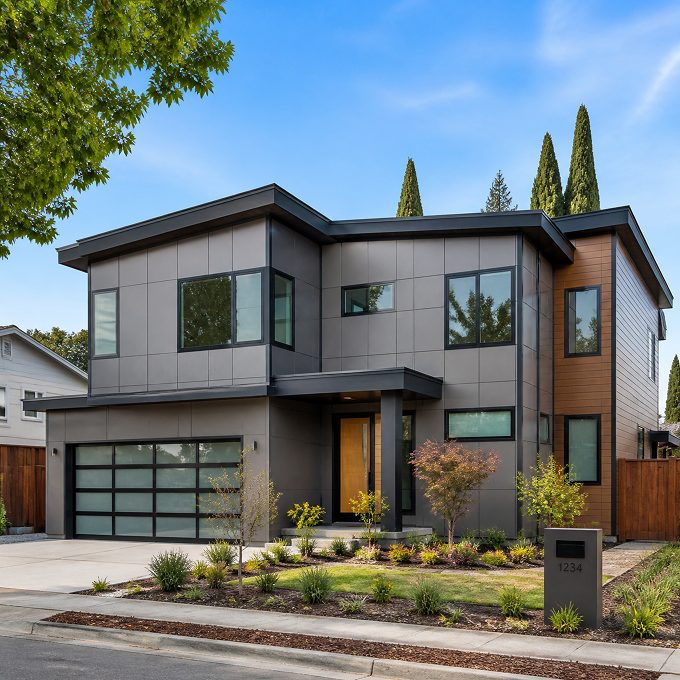
Commercial buildings along the North San Jose waterfront, around the Guadalupe River confluence with the bay, and in the Alviso industrial area are in the most directly marine-influenced atmospheric environment in the San Jose market. New construction and facade renovation projects in these locations require explicit consideration of corrosion-resistant cladding specifications, and standard commercial ACM or aluminum panel systems designed for inland environments are not appropriate without enhanced coating and hardware specifications.
Properties Along Major Sloughs and Waterways
Santa Clara County includes numerous tidal sloughs, channels, and low-lying areas with elevated humidity and occasional salt water influence extending well inland from the bay shoreline. Properties adjacent to the Guadalupe River, Coyote Creek lower reaches, and the slough system in North San Jose are in corrosion environments that are more demanding than the general San Jose inland atmosphere.
Hillside and Elevated Properties Facing the Bay
Properties on elevated sites with direct line-of-sight exposure to the San Francisco Bay, including hillside locations in North San Jose and some areas of Milpitas, receive more direct salt air exposure than might be expected based on their distance from the shoreline. Topographic exposure to onshore winds can carry marine atmosphere further inland than ground-level measurements suggest, and buildings on elevated, exposed sites should be evaluated for their actual atmospheric exposure rather than assumed to be in an inland environment based on distance alone.
Industrial and Manufacturing Facilities
Light industrial and manufacturing facilities throughout North San Jose, Alviso, and the broader Santa Clara County industrial corridor may be subject to elevated atmospheric corrosion from both marine and industrial sources. For these facilities, exterior metal panel specifications should be developed with reference to the specific atmospheric chemistry of the site, and anti-corrosion coating and substrate specifications appropriate for industrial environments should be applied.
Residential Properties Near the Bay
Custom residential and multi-family residential projects on bay-adjacent sites in North San Jose and Alviso face the same corrosion environment as commercial properties in these areas. For residential projects where architectural metal panel cladding is specified, anti-corrosion substrate and coating selections are as important as they are for commercial buildings on equivalent sites.
Signs an Existing Metal Panel System Is Failing to Corrosion
On existing buildings, there are identifiable signs that a metal panel system is experiencing corrosion-related degradation. Recognizing these signs early allows corrective action before the corrosion affects the structural integrity of the attachment system or the wall assembly behind the panels.
- White or gray powdery deposits on the panel surface – indicating aluminum oxide formation or coating failure
- Brown or rust-colored staining running from fastener locations or panel edges – indicating corrosion in steel fasteners or attachment hardware
- Bubbling, blistering, or peeling of the panel finish coating – indicating undercutting corrosion beneath the surface coating
- Visible pitting on the panel face, particularly near joints or cut edges
- Staining patterns on the building facade that follow the panel joint layout – indicating moisture tracking through joints and carrying mineral deposits onto the panel face
- Loose or rattling panels – potentially indicating corrosion-related failure of attachment hardware
- Dark staining or discoloration on the wall substrate visible when panels are inspected from behind – indicating moisture has been reaching the wall assembly through corroded joints or fastener penetrations
Free Estimates
Free On-Site Consultations
Our Anti-Corrosion Metal Panel Installation Process
Even the most carefully specified and installed anti-corrosion metal panel system requires regular maintenance to perform as intended over its service life in a bay-adjacent environment. The maintenance requirements for anti-corrosion systems are more specific and more consequential than for standard metal panel installations in inland environments.
Regular washing: Salt deposits should be washed from panel surfaces regularly, particularly after wind events that carry bay air inland. The frequency depends on the specific site exposure, but for directly bay-adjacent properties, washing every one to three months during the dry season is a reasonable practice. Fresh water rinsing from the top of the building down is appropriate; high-pressure washing should be avoided.
Joint sealant inspection: Joint sealants on bay-adjacent metal panel installations should be inspected at least annually for cracking, adhesion loss, and compression set. Salt air accelerates sealant degradation, and failed sealant joints allow corrosive moisture to reach the attachment hardware and wall assembly behind the panels. Prompt re-sealing of any failed joints is one of the most important maintenance tasks on a coastal metal panel system.
Fastener and hardware inspection: Attachment hardware should be inspected periodically for signs of corrosion, particularly at any location where the hardware was scratched, abraded, or otherwise had its protective coating compromised during or after installation. Even 316 stainless steel can develop surface rust staining under extreme marine exposure, and early intervention prevents more serious corrosion from developing.
Touch-up of coating damage: Any scratches, chips, or edge damage to the panel finish coating should be touched up promptly with a compatible marine-grade touch-up product to prevent corrosion from initiating at the damaged location.
San Jose Areas and Locations We Serve
We serve residential and commercial clients throughout San Jose and the broader South Bay from our base at 137 E Saint James St.
Highest Corrosion Risk Locations
- Alviso and the North San Jose bay shoreline area
- Properties adjacent to the Guadalupe River and tidal sloughs in North San Jose
- Elevated sites with direct bay exposure in North San Jose and Milpitas
- Industrial areas along the bay shoreline in Santa Clara County
Moderate Corrosion Risk Locations
- North San Jose commercial and residential areas within 2 to 5 miles of the bay shoreline
- Berryessa and lower-lying areas of Northeast San Jose
- Bay-facing elevations of hillside properties in Milpitas and North San Jose
General San Jose Service Area
- Downtown San Jose, SoFA District, and Japantown
- Willow Glen, Naglee Park, and Roosevelt Park
- Rose Garden and Cambrian Park
- Almaden Valley, Blossom Hill, and South San Jose
- East San Jose, Five Wounds, and Olinder neighborhoods
- Northside, Lakehouse, and Market-Almaden communities
Surrounding Communities
- Milpitas (ZIP 95035) – including bay-adjacent locations with elevated corrosion exposure
- Saratoga (ZIP 95070) – premium residential and commercial
- Evergreen and East San Jose (ZIP 95135)
- Los Gatos, Campbell, Santa Clara, Sunnyvale, and Cupertino
- Fremont and other South Bay communities within 20 miles of San Jose
Why Choose San Jose Stucco & Plastering for Anti-Corrosion Metal Panel Installation
30+ Years of Exterior Wall System Experience Exterior wall systems are the core of our business. That depth of experience includes direct familiarity with how metal cladding performs across different South Bay microclimates, including the bay-adjacent environments where corrosion risk is a real factor in cladding selection and specification.
Honest Corrosion Risk Assessment Not every property in San Jose requires anti-corrosion specifications, and we will tell you honestly whether your site’s exposure level justifies the additional cost of enhanced coating systems and hardware. We evaluate each project on its actual site conditions rather than applying a one-size-fits-all specification.
Full Range of Cladding Systems We install anti-corrosion metal panels alongside the complete range of modern exterior cladding: ACM panels, decorative aluminum systems, architectural concrete panels, phenolic and HPL panels, fiber cement, composite wood, rainscreen assemblies, and stucco. Projects that combine anti-corrosion metal panels with other cladding materials are handled entirely by our crew.
Correct Fastener and Hardware Specification We do not install stainless steel panels with galvanized steel fasteners, or aluminum panels with carbon steel brackets, in environments where corrosion is a known risk. The attachment system is specified to match the corrosion environment, not to minimize material cost.
Price-Match Guarantee We will match any competitor’s written estimate. Bring us a written quote from another licensed contractor and we will match it.
Fully Licensed and Insured All work is performed by our own trained crew under full insurance and California contractor licensing.
Free Estimates and Free On-Site Consultations We do not charge for project assessments or written estimates. We visit the site, evaluate the corrosion environment honestly, and give you a thorough, accurate estimate with no obligation.
Frequently Asked Questions About Anti-Corrosion Architectural Metal Paneling in San Jose
How do I know if my property needs anti-corrosion metal panel specifications? The primary factors are proximity to the San Francisco Bay shoreline, topographic exposure to onshore winds from the bay, and whether the site is in a low-lying area with elevated ambient humidity. Properties within a mile or two of the bay shoreline in North San Jose and Alviso are generally in a corrosion environment that warrants enhanced specifications. Properties further inland in San Jose’s residential neighborhoods are typically in a C2 or lower corrosion category where standard architectural metal panel specifications are appropriate. We assess this during the project consultation at no charge.
What is the difference between standard ACM panels and anti-corrosion metal panels? Standard ACM panels use aluminum face sheets with PVDF or polyester coatings and galvanized or zinc-plated attachment hardware. These products perform well in inland environments but are not specifically engineered for marine or industrial atmospheric exposure. Anti-corrosion metal panel systems incorporate substrate materials and coating systems selected for resistance to the specific corrosion mechanisms present in marine and industrial atmospheres, along with stainless steel or other corrosion-resistant attachment hardware and marine-grade joint sealants.
Are stainless steel panels worth the additional cost for bay-adjacent properties? For properties in the most directly marine-influenced locations in North San Jose and Alviso, stainless steel panels, particularly Grade 316, provide a level of corrosion resistance that other metal substrates cannot match. Whether the additional cost is justified depends on the specific site exposure level, the design life of the installation, and the owner’s maintenance commitment. For properties in moderate marine environments, correctly specified aluminum panels with marine-grade PVDF coatings and stainless steel hardware may provide adequate performance at lower cost. We discuss this trade-off honestly during the specification process.
What is galvanic corrosion and why does it matter for metal panel installations? Galvanic corrosion occurs when two dissimilar metals are in electrical contact in the presence of an electrolyte, typically moisture. The less noble metal corrodes preferentially. In metal panel installations, galvanic corrosion commonly occurs when aluminum panels are fastened with steel screws or attached to steel brackets without isolation. In low-humidity inland environments, this contact may not produce significant corrosion over the life of the installation. In bay-adjacent environments where moisture is regularly present, galvanic corrosion can destroy attachment hardware in a fraction of the time it would take atmospheric corrosion alone to cause the same damage.
Can anti-corrosion metal panels be used on residential homes? Yes. Residential properties in bay-adjacent North San Jose and Alviso face the same corrosion environment as commercial buildings in these areas, and the specification approach is the same regardless of building type. For residential projects, anti-corrosion metal panels are most commonly specified on contemporary custom homes where architectural metal cladding is part of the design and the site’s corrosion environment requires enhanced specifications.
How often should bay-adjacent metal panel installations be inspected? Annual inspection is a reasonable baseline for most bay-adjacent metal panel installations. Key inspection points are joint sealant condition, fastener and hardware condition where visible, panel edge coating integrity, and any areas of surface staining or discoloration that may indicate corrosion initiation. More frequent inspection, perhaps every six months, is appropriate for installations in the most directly bay-exposed locations.
Do you install zinc panels and natural weathering metal systems? Yes. Natural zinc, copper, and Cor-Ten weathering steel panels are options we install for appropriate applications. Each of these materials has specific performance characteristics and aesthetic qualities that make them suitable for particular projects and environments. We discuss these options alongside conventional coated aluminum and stainless steel systems when evaluating anti-corrosion metal panel specifications for South Bay projects.
Get a Free Estimate for Anti-Corrosion Architectural Metal Paneling in San Jose