Low-Maintenance Exterior Systems
in San Jose, CA
Exterior Contractors Helping South Bay Homeowners and Property Owners Spend Less Time on Upkeep
Low-maintenance exterior systems in San Jose, CA are not a new product category. They are a response to a very practical problem that homeowners and commercial property owners in the South Bay have been dealing with for decades: exterior finishes that demand constant attention. Repainting every five to seven years. Stucco repairs that seem to come back in the same spots. Wood siding that rots, swells, and splits. Painted surfaces that chalk and fade under California’s UV exposure. At some point, the recurring cost and hassle of maintaining a conventional exterior finish stop making sense, particularly when there are purpose-engineered alternatives available that hold their appearance and protect the building without requiring that level of ongoing investment. San Jose Stucco & Plastering has been working on exterior walls in the South Bay for over 30 years. We install low-maintenance exterior systems for both residential and commercial properties, using materials that are specifically engineered to perform in Bay Area conditions with minimal upkeep. Whether you are a homeowner who is done with the repainting cycle, a property manager who needs a building exterior that does not generate constant maintenance calls, or a developer specifying finishes for a new project, we can help you find and install the right system for your building.
Free Estimates
Free On-Site Consultations
Why Conventional Exterior Finishes Fall Short in the Bay Area
San Jose’s climate is mild by most standards, but it is not easy on exterior finishes. Understanding what drives maintenance demand here helps explain why low-maintenance systems have become a more serious consideration for South Bay property owners.
UV exposure is the primary driver of paint degradation in this region. California receives more annual solar radiation than most of the country, and painted exterior surfaces — whether over stucco, wood, or fiber cement — are subject to constant UV bombardment that breaks down the paint film, causes fading, chalking, and eventually surface failure. Most exterior paint systems in San Jose need refreshing every five to seven years under normal conditions. In south and west-facing exposures, that interval can be shorter.
Moisture cycling during the rainy season puts stress on surfaces that are not perfectly sealed. Water finds small cracks, penetrations, and lapses in sealant continuity, works its way into the substrate, and then dries out as conditions change. Over years, this cycling causes stucco to crack and spall, wood to swell and check, and painted surfaces to peel at the points where moisture has infiltrated behind the film.
Salt air in neighborhoods closer to the Bay, including Alviso and areas near the shoreline, accelerates corrosion on metal surfaces and degrades paint adhesion more quickly than in inland locations. Buildings in these areas experience exterior finish deterioration at a faster rate than the broader San Jose market.
Wildfire smoke and ash from the fires that now affect the Bay Area regularly each fall deposits acidic particulate on exterior surfaces. This is a newer stressor that was not part of the calculation when most of the South Bay’s housing stock was originally finished, and it adds to the maintenance load on surfaces that were not designed to handle it.
Low-maintenance exterior systems address these stressors at the material level rather than relying on a painted surface to hold the line. The finishes are integral to the panel or product itself, not applied as a separate coating that needs to be renewed. The result is an exterior that holds its appearance through Bay Area conditions without requiring the regular attention that conventional finishes demand.
What Makes an Exterior System Truly Low-Maintenance
Not every product marketed as low-maintenance actually is, and some product claims in this space are worth examining carefully. Here is what genuinely separates a low-maintenance exterior system from a conventional one:
The finish is integral, not applied. On a painted stucco or painted wood exterior, the visible finish is a separate coating layer that sits on top of the substrate. When that coating fails, the substrate is exposed. On a true low-maintenance panel system, the color and surface texture are part of the panel itself, manufactured in rather than applied after. There is no separate paint film to monitor, refresh, or fail.
The substrate does not absorb moisture. Wood absorbs water, swells, and eventually rots or splits if not protected. Stucco absorbs moisture through cracks and porous surfaces over time. Fiber cement, metal, phenolic, and HPL panels are engineered to resist moisture absorption at the substrate level, not just at the surface. That resistance is what prevents the moisture-cycling damage cycle that drives so much exterior maintenance demand.
The material does not corrode, rot, or support biological growth. Mold, mildew, and algae growth on exterior surfaces is a maintenance issue in parts of the Bay Area, particularly on shaded north-facing elevations and in areas with higher humidity. Materials that are non-porous and moisture-resistant at the surface level are significantly less hospitable to biological growth than painted wood or stucco.
The attachment and sealing system is designed to last. A panel system installed with a properly engineered attachment system and durable sealant products at joints and perimeters will not develop the point failures that drive spot repairs on conventional stucco and painted exteriors.
Our Low-Maintenance Exterior System Options
We install several categories of low-maintenance exterior systems, each with its own performance profile and aesthetic range. Here is an overview of what we work with most:
Fiber Cement Siding and Panels
Fiber cement is the most widely used low-maintenance exterior siding material in California, and it earns that position based on real performance. It does not rot, warp, crack from moisture cycling, or support insect damage. It holds paint significantly longer than wood — James Hardie’s factory-primed and pre-finished products carry paint warranties of up to 15 years, which is roughly twice what most field-applied paint systems deliver on wood in Bay Area conditions. It is also non-combustible, which matters for homeowners in fire-prone parts of Santa Clara County.
The trade-off with fiber cement is that it still requires repainting over its service life, even if that interval is longer than with wood. For property owners whose primary goal is eliminating the paint cycle entirely, fiber cement is a meaningful improvement over wood but not the end of the road. For those who want a lower-maintenance alternative to wood at a practical cost point, it is an excellent choice.
We install fiber cement lap siding, panel siding, vertical board profiles, and large-format panel systems for both residential and commercial applications. We follow James Hardie’s installation specifications on every project, including proper flashing, clearance, and joint treatment requirements that protect the material’s performance over its service life.
Metal Siding and Facade Systems
Architectural metal siding is the closest thing to a truly maintenance-free exterior finish available for residential and commercial buildings. Steel and aluminum panel systems with factory-applied coatings do not require repainting on any regular cycle. They do not absorb moisture, rot, crack, or support insect damage. A properly installed metal facade system on a San Jose home or commercial building will look essentially the same 20 years from installation as it does the day it goes on, with nothing more than occasional washing.
Modern architectural metal siding has also moved well beyond industrial aesthetics. Standing seam metal panels, flat-lock aluminum systems, corrugated metal in contemporary profiles, and custom-fabricated metal panel assemblies are being used on custom homes in Willow Glen and Los Altos Hills, on commercial renovations downtown, and on everything in between. The material’s durability and its design range have made it a serious option for property owners who previously would not have considered metal as a residential finish.
We install metal siding and facade systems in steel, aluminum, and specialty alloys. For properties in coastal-adjacent areas of the Bay, we specify alloys and protective coatings appropriate for elevated salt air exposure.
Phenolic and HPL Exterior Panels
Phenolic and HPL panels are manufactured under extreme heat and pressure, bonding layers of resin-impregnated material into a panel that is dense, dimensionally stable, and highly resistant to UV fading, moisture absorption, and surface impact. The surface color and texture are integral to the panel structure, not applied as a separate coating. In exterior applications in climates like San Jose’s, phenolic and HPL panels maintain their appearance with very little beyond periodic cleaning.
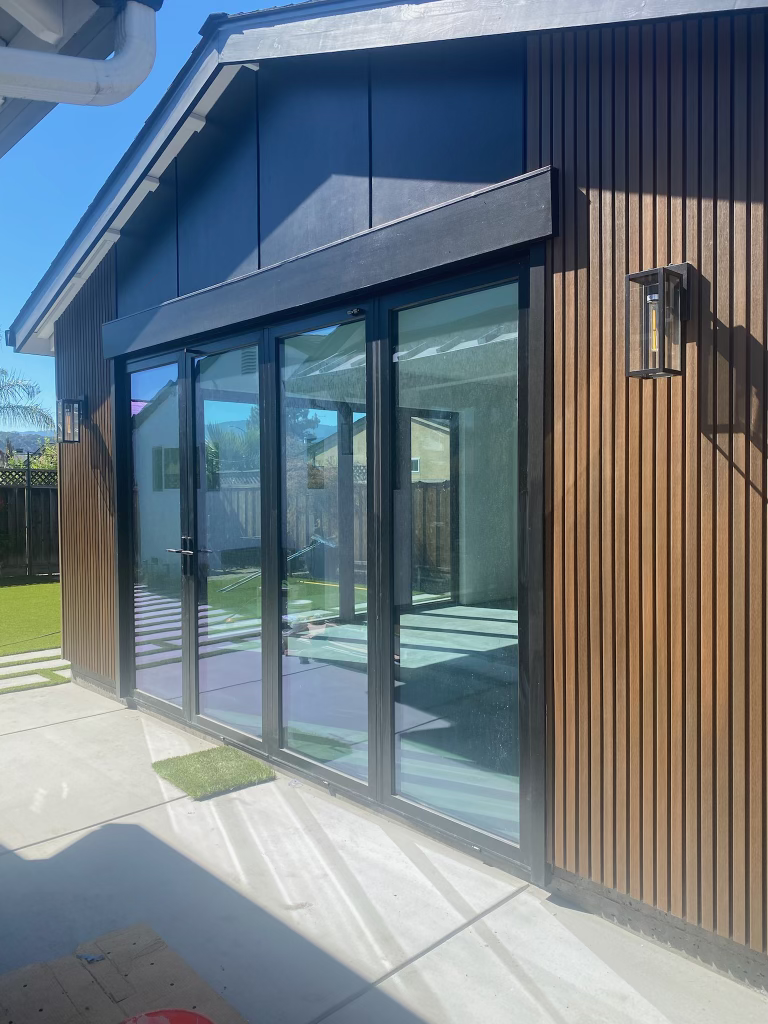
These panels are available in a wide range of colors, solid finishes, woodgrain surfaces, stone textures, and custom options. For property owners who want a wood or natural material aesthetic without the maintenance demands of real wood, HPL panels in woodgrain finishes are a particularly compelling option. The appearance holds under UV exposure in a way that painted or stained real wood simply does not.
We install phenolic and HPL panel systems for both residential and commercial applications, in ventilated rainscreen configurations and direct-applied systems depending on the wall assembly and project conditions.
ACM and Architectural Metal Panel Systems
ACM panels and architectural metal panel systems are the standard low-maintenance specification for commercial exteriors across San Jose, and they are increasingly used on higher-end residential projects as well. The combination of minimal maintenance requirements, design flexibility, and a clean contemporary appearance has made these systems the default choice for commercial property owners and developers who want an exterior that holds its presentation without ongoing attention.
ACM panels with PVDF (polyvinylidene fluoride) coatings carry manufacturer warranties of 10 years or more on the finish and perform well beyond that in real-world conditions. The coating resists UV fading, chalking, and moisture far better than conventional field-applied paint systems. For commercial property owners managing multiple buildings or large properties, the reduction in maintenance cost over time is a real financial benefit.
Composite Wood Cladding
Composite wood cladding occupies a specific position in the low-maintenance exterior market: it delivers a wood aesthetic with significantly reduced maintenance compared to real wood siding. Modern composite wood products are engineered to resist moisture absorption, cracking, and insect damage, and they do not require the regular staining or sealing that natural wood demands. Many carry fire ratings that satisfy California’s WUI zone requirements, which makes them a practical option for properties in the foothills and hillside areas around San Jose where real wood siding may not meet code.
Composite wood cladding is not as maintenance-free as metal or phenolic systems — most products still benefit from periodic cleaning and some manufacturers recommend a protective coating refresh over time. But compared to real wood siding, the maintenance reduction is substantial, and the aesthetic is close enough to real wood that most observers cannot tell the difference at normal viewing distances.
Rainscreen Cladding Systems
A rainscreen wall assembly deserves a specific mention in the context of low-maintenance exteriors because it addresses maintenance at the system level rather than just the surface level. Many exterior finish problems on Bay Area buildings are not purely a surface failure. They are a symptom of moisture that has accumulated in the wall assembly behind the outer cladding. Repainting or re-stuccoving over a wall that has an unresolved moisture management condition just delays the next round of repairs.
A properly designed rainscreen assembly, by maintaining a drainage and ventilation cavity between the water-resistive barrier and the outer cladding, keeps moisture from loading up in the wall assembly in the first place. For older Bay Area buildings that have experienced recurring moisture-related exterior problems, re-cladding with a rainscreen assembly is often the most effective path to genuinely low-maintenance exterior performance.
We install rainscreen assemblies using fiber cement, metal, HPL, phenolic, and composite panel outer cladding systems, matched to the project’s aesthetic and performance goals.
Residential Low-Maintenance Exteriors in San Jose
For homeowners in San Jose, the decision to move to a low-maintenance exterior system is usually driven by one of a few specific frustrations: a repainting cycle that feels like it never ends, stucco cracks that keep coming back, wood siding that has reached the point where patching and painting no longer makes sense, or a wildfire risk concern that has made non-combustible materials a genuine priority.
The neighborhoods where we see the most residential low-maintenance exterior demand include:
Willow Glen and Rose Garden, where the established housing stock includes a lot of mid-century and older homes that have been through multiple repainting cycles and where owners are increasingly choosing fiber cement or metal panel systems for re-cladding rather than re-stucco or repaint.
Almaden Valley and Blossom Hill, where proximity to open land and fire risk zones has made non-combustible, low-maintenance cladding systems a practical and sometimes code-required choice for homeowners updating aging exteriors.
Naglee Park and Roosevelt Park, where historic homes are being re-clad with fiber cement systems that replicate traditional wood profiles while providing the performance and reduced maintenance that real wood can no longer deliver cost-effectively.
Berryessa, Alum Rock, and East San Jose, where a mix of residential property types includes both owner-occupied homes and rental properties where reduced maintenance cost over time is a direct financial benefit to the owner.
South San Jose and Evergreen, where newer developments and active real estate turnover have created demand for exterior updates that add value and reduce ongoing maintenance costs.
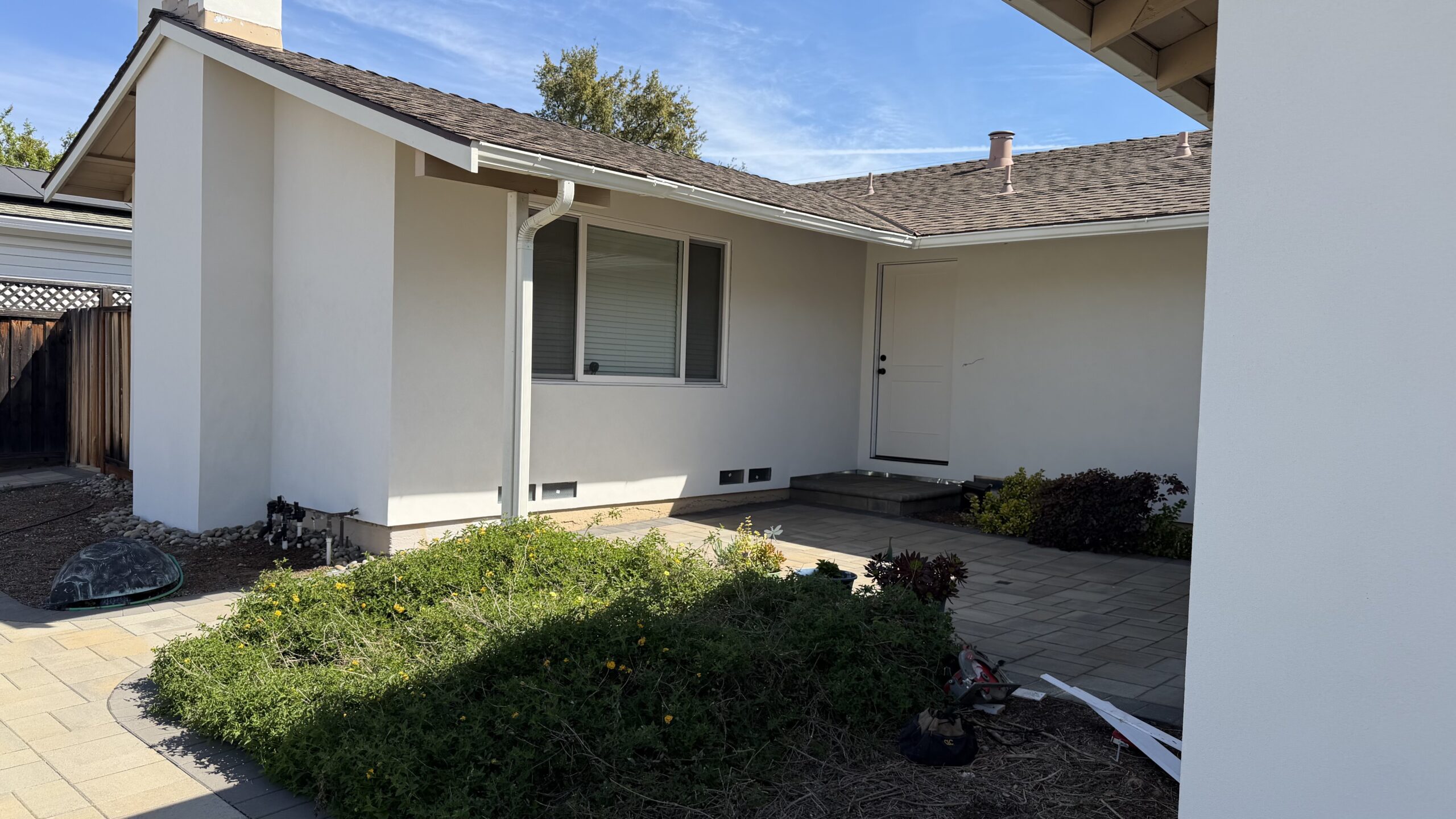
For residential projects, we offer free on-site consultations where we assess the existing exterior condition, discuss material options that suit the home’s architecture and the owner’s goals, and provide a clear estimate with no obligation.
Free Estimates
Free On-Site Consultations
Low-Maintenance Exteriors for Commercial and Multi-Family Properties
For commercial property owners and managers, the case for low-maintenance exterior systems is partly about appearance and partly about operational cost. A building exterior that requires a full repaint every five to seven years generates both direct cost — the paint contract itself — and indirect cost in the form of scaffolding, access management, tenant disruption, and project management time. Multiply that across a portfolio of properties and the cumulative cost of maintaining conventional painted exteriors is substantial.
Low-maintenance panel systems and cladding materials shift that cost profile significantly. The higher upfront installation cost of a metal, ACM, or phenolic panel system is offset over time by the reduction in maintenance spend, and on a long enough time horizon — which is how most commercial real estate is managed — the economics favor the durable system.
Beyond cost, there is a tenant and market perception dimension. A commercial building with a well-maintained, contemporary exterior presents differently to prospective tenants than one with a faded or patched painted finish, regardless of the interior condition. For multi-family residential properties, exterior condition is one of the primary factors that affects both tenant retention and achievable rents.
We work with commercial property owners, asset managers, and developers across San Jose on low-maintenance exterior system installations and upgrades, from single-building renovations to larger portfolio projects.
The Installation Process
Every low-maintenance exterior system installation we do follows the same fundamental process, whether it is a residential re-cladding or a commercial facade renovation:
Site Evaluation and Consultation We start with a free on-site visit to evaluate the existing exterior conditions, identify any substrate or moisture issues that need to be resolved before new cladding goes on, and discuss the material options and trade-offs that apply to your specific building. This is not a sales call. It is a working conversation about what your building actually needs.
Material Selection Based on the site evaluation, your aesthetic preferences, your maintenance goals, and your budget, we recommend the systems that make the most sense and walk you through the options clearly. We work with multiple product lines and are not locked into recommending any particular manufacturer.
Substrate Preparation Before any new cladding goes on, the wall surface is prepared properly. This includes removing existing cladding where necessary, repairing substrate damage, installing or replacing the water-resistive barrier, and installing correct flashing at all penetrations, windows, doors, and the foundation line. This work is where the long-term performance of the system is established.
Installation We install the cladding system per manufacturer specifications and applicable building codes. On panel systems, this includes the attachment and sub-framing installation, panel installation and alignment, joint treatment, and all perimeter and trim details. On fiber cement and composite siding installations, it includes fastening schedules, joint gaps, and sealant application at all required locations.
Walkthrough and Warranty We walk the completed installation with you before closing the project. We back our work with warranties and price-match any competitor’s written estimate.
Common Questions About Low-Maintenance Exterior Systems
How much maintenance does a metal or panel exterior actually require?
Most architectural metal and panel systems require nothing more than washing once or twice a year to remove dust, pollen, and surface deposits. There is no paint to monitor or refresh, no sealant to reapply annually, and no surface coating to watch for cracking or peeling. Joint sealants in panel systems benefit from an inspection every several years, and any sealant that has reached the end of its service life should be replaced as part of routine building maintenance. Beyond that, a properly installed metal or panel exterior is largely self-sufficient.
How do low-maintenance materials compare to stucco over the long term?
Stucco is a durable and well-proven exterior material, and we install a lot of it. But stucco requires more ongoing attention than most panel systems. It is susceptible to cracking from building movement and moisture cycling, it requires repainting on a regular cycle, and repairs to cracked or spalled stucco are a recurring expense for most building owners. Low-maintenance panel systems do not crack from moisture cycling, do not require repainting, and are not subject to the kind of localized surface failures that drive stucco repair costs. For property owners who have reached the point where the stucco maintenance cycle is no longer acceptable, re-cladding with a low-maintenance system is a decision that pays for itself over time.
Are low-maintenance exterior systems more expensive upfront?
Generally, yes. Fiber cement, metal, ACM, and phenolic panel systems typically carry a higher installation cost than painted stucco or wood siding. The return on that higher upfront investment comes through reduced maintenance spend over time, the elimination of repainting cycles, and in many cases improved resale value. How quickly that investment pays back depends on the material chosen, the size of the project, and how frequently the previous exterior was being maintained. We are happy to walk through this trade-off clearly during the consultation so you can make the decision that actually makes sense for your situation.
Can I mix low-maintenance materials with existing stucco or other finishes?
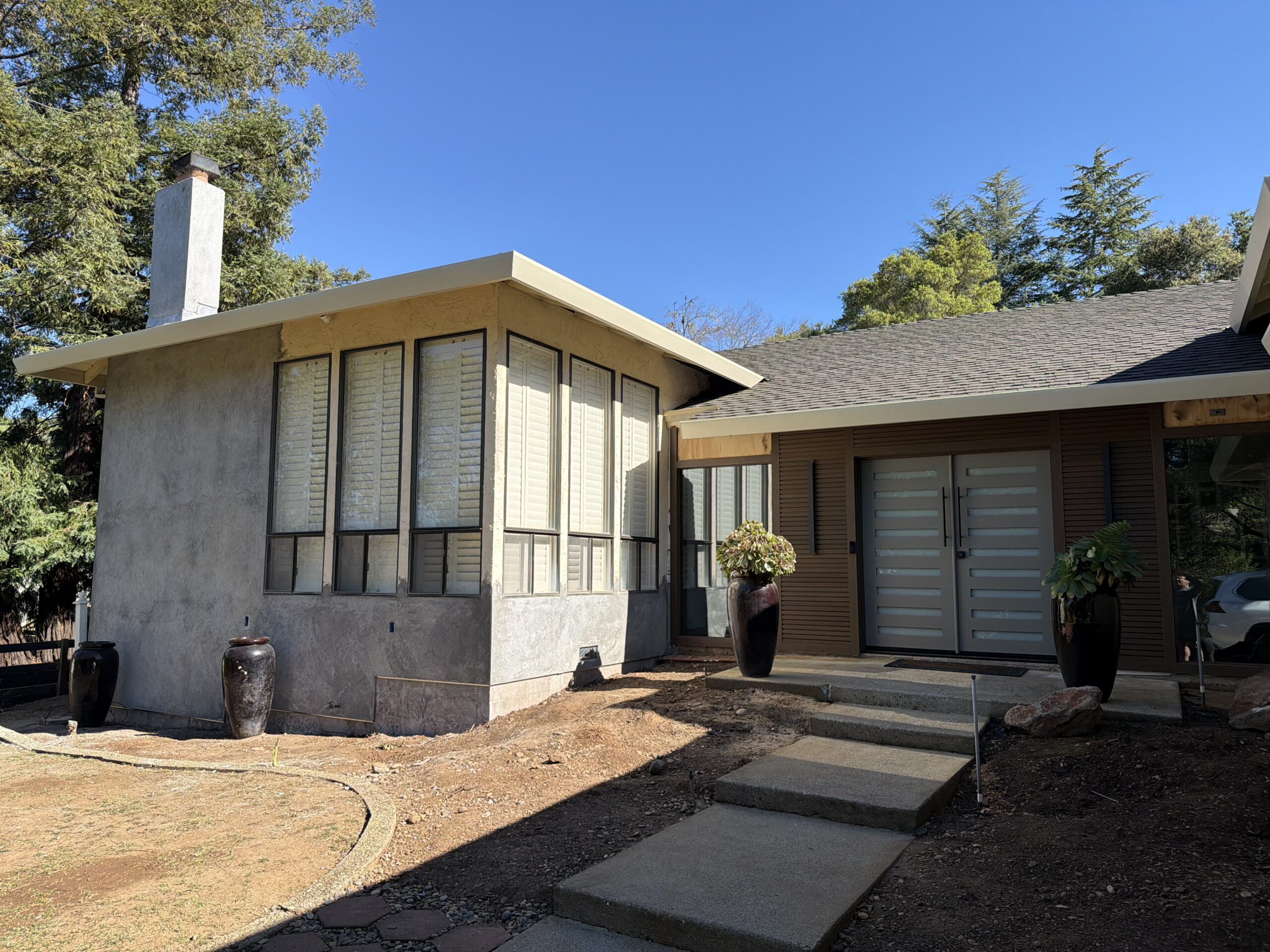
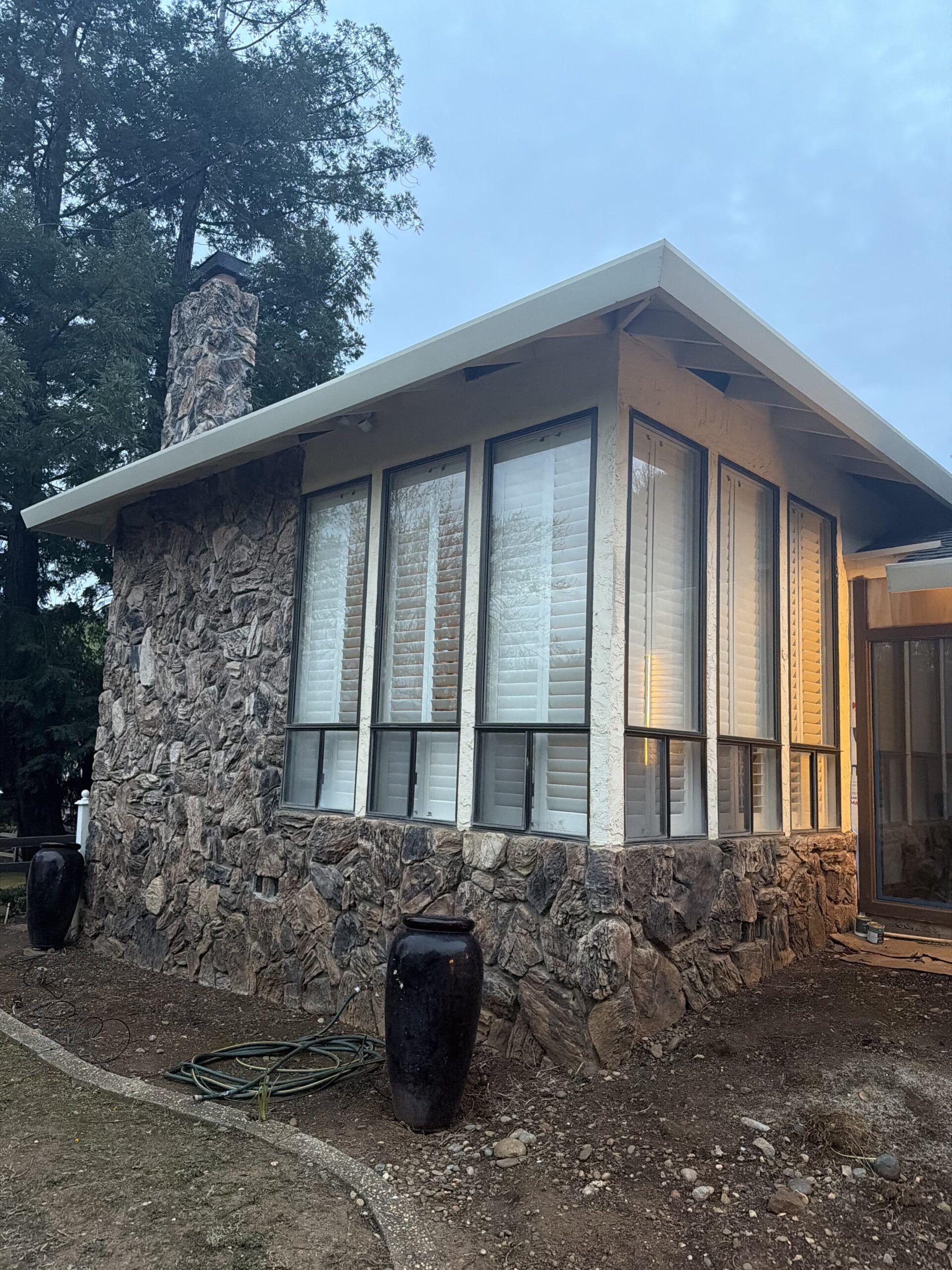
Yes, and this is a common approach on residential projects in particular. Many homeowners choose to re-clad specific elevations or feature areas with a panel or metal system while retaining stucco on other parts of the building, creating a mixed-material exterior that provides visual interest and reduces maintenance on the most exposed or problematic surfaces. We design and install these mixed-material exterior systems regularly and can help you think through which combination works best for your building.
Do these systems work on older homes in San Jose?
Yes. The majority of our residential low-maintenance exterior work is on existing homes, not new construction. Older homes in San Jose — particularly those built in the 1950s through 1980s that are going through exterior renovations — are a strong fit for fiber cement and metal panel systems. The installation process includes proper substrate preparation and any necessary remediation of existing issues, so the new cladding goes on over a wall assembly that is ready to support it.
Service Area
We are based in San Jose and serve residential and commercial clients throughout the South Bay:
- Downtown San Jose, Japantown, Willow Glen, and Rose Garden
- Naglee Park, Roosevelt Park, and the Hensley Historic District
- Almaden Valley, Blossom Hill, and South San Jose
- Berryessa, Alum Rock, and East San Jose
- North San Jose and the North First Street corridor
- Milpitas (ZIP 95035), Saratoga (ZIP 95070), and Evergreen (ZIP 95135)
- Santa Clara, Campbell, Los Gatos, and surrounding South Bay communities
For commercial projects, we serve the broader Bay Area. Call us to discuss your location.
Get a Free Estimate on a Low-Maintenance Exterior System in San Jose
If you are tired of the repainting cycle, the recurring stucco repairs, or the ongoing cost of maintaining a conventional exterior finish, there is a better path. San Jose Stucco & Plastering has been installing low-maintenance exterior systems across the South Bay for over 30 years, and we bring the same craftsmanship and attention to detail to every project regardless of size.
We offer free estimates and free on-site consultations with no obligation. We price-match any competitor’s written estimate. And most of our work comes through referrals, because property owners who make the switch to a low-maintenance exterior system are glad they did.