Weather-Resistant Exterior Cladding
in San Jose, CA
Exterior Cladding Contractors Serving the South Bay Area
Weather-resistant exterior cladding in San Jose, CA is something every building needs, whether the owner thinks about it or not. The exterior wall is the first and often the only line of defense between a building’s structure and the elements: sun, rain, wind, moisture, and in some parts of the South Bay, salt air and wildfire-driven conditions. San Jose Stucco & Plastering has spent over 30 years working on exterior wall systems, and weather resistance is not a feature we add on top of a finish. It is the foundation everything else is built on.
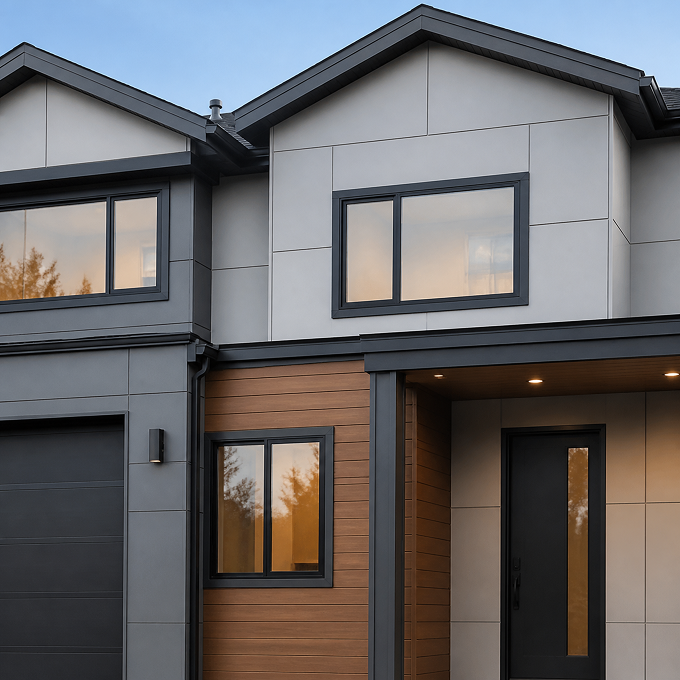
We install a full range of weather-resistant cladding systems for residential and commercial properties: fiber cement siding and panels, architectural metal panels, ACM systems, phenolic and HPL panels, rainscreen assemblies, composite wood cladding, and our core trade of stucco and EIFS systems. Whatever material fits your project, the underlying goal is the same: a wall assembly that keeps water out, manages the moisture that does get in, and holds up under San Jose’s sun, wind, and rain year after year.
Free Estimates
Free On-Site Consultations
What "Weather-Resistant" Actually Means for an Exterior Wall
The term gets used loosely in marketing, but weather resistance in a real building envelope comes down to a handful of specific things working together. It is worth understanding these, because they explain why some exteriors hold up for decades and others develop problems within a few years.
Water-Resistive Barrier (WRB). Beneath the visible cladding, every wall assembly should have a continuous water-resistive barrier, sometimes called building paper, housewrap, or fluid-applied membrane. This layer is the actual waterproofing line of the wall. The cladding on top of it sheds most of the water, but the WRB is what stops the water that gets past the cladding from reaching the sheathing and framing.
Flashing at every penetration and transition. Windows, doors, vents, light fixtures, hose bibs, and the foundation line are all places where the wall assembly is interrupted, and every interruption is a potential entry point for water. Properly installed flashing directs water around these penetrations and back to the exterior, rather than allowing it to track behind the cladding.
Drainage. Water that gets behind the cladding, which happens even in well-built walls, needs a way out. Whether through a rainscreen cavity, weep screeds, or drainage mats behind the cladding material, a weather-resistant wall assembly gives water a path to exit rather than trapping it.
Sealant at joints and terminations. Wherever cladding panels meet, where cladding meets trim, and where the cladding terminates at the roofline or foundation, sealant prevents water entry at the joint. Sealant quality, application, and joint design all affect how long this protection lasts.
Material resistance to UV, moisture absorption, and temperature cycling. The cladding material itself needs to hold up to direct exposure: sun that fades and degrades surfaces, moisture that gets absorbed and causes swelling or rot, and the expansion and contraction that comes with daily and seasonal temperature swings.
A weather-resistant cladding installation is the result of all of these elements being addressed correctly, not just the visible finish looking good on installation day. This is the level of detail we bring to every project.
San Jose's Weather Conditions and What They Do to Exterior Walls
San Jose’s climate is often described as mild, and compared to many parts of the country it is. But “mild” does not mean “easy on buildings.” Several specific conditions in the South Bay create real demands on exterior cladding:
Extended dry season with high UV exposure. San Jose gets very little rain for roughly six months of the year, paired with strong, direct sun. This combination is hard on painted surfaces and on any material that is not engineered for UV resistance. South and west-facing walls take the brunt of this exposure and often show wear first.
Concentrated winter rainfall. When the rain does come, it tends to arrive in atmospheric river events: heavy, sustained rainfall over a short period rather than spread evenly across the year. This kind of rainfall pattern puts real pressure on drainage details and flashing. A wall assembly that performs fine under light, intermittent rain can still fail under sustained, heavy exposure if the drainage details are not right.
Salt air near the Bay. Properties in Alviso and other areas closer to the shoreline of San Francisco Bay experience accelerated corrosion on unprotected metal and faster degradation of paint films compared to inland San Jose. Cladding materials and fasteners in these areas need to be selected with that exposure in mind.
Wind-driven rain in certain microclimates. Hillside areas and properties with exposure to prevailing wind patterns can experience wind-driven rain that pushes water into wall assemblies more aggressively than still-air rainfall. This is a factor we evaluate during site assessments, particularly for homes in the foothills around Almaden Valley and the hills east of the city.
Wildfire-related conditions. Beyond the direct fire risk that drives non-combustible material requirements in WUI zones, wildfire smoke deposits acidic ash and particulate on exterior surfaces during fire season, which adds a chemical exposure element that older building codes did not anticipate.
Each of these conditions factors into how we design and install cladding systems for properties in different parts of San Jose and the South Bay.
Our Weather-Resistant Cladding Systems
Fiber Cement Siding and Panels
Fiber cement is one of the most weather-resistant siding materials available at a practical cost point. It does not absorb moisture the way wood does, so it does not swell, warp, or rot from repeated wetting and drying cycles. It holds paint significantly longer than wood, which matters directly for weather resistance: a painted surface that is failing is a surface that is no longer protecting the substrate underneath as intended. Fiber cement is also non-combustible, addressing fire-related exposure in addition to standard weather resistance.
We install fiber cement lap siding, panel siding, and large-format panels for residential and commercial projects, following James Hardie’s installation specifications for flashing, fastening, and joint treatment. These details are what determine whether a fiber cement installation performs as designed through repeated Bay Area wet seasons.
Architectural Metal Panels
Properly coated architectural metal panels are among the most weather-resistant claddings available. Steel and aluminum systems with factory-applied finishes resist UV degradation, do not absorb moisture, and are dimensionally stable across San Jose’s temperature swings. For properties exposed to salt air, we specify alloys and coating systems rated for that exposure, since not all metal products perform equally in coastal-adjacent conditions.
Metal cladding also performs well under the kind of sustained, heavy rainfall San Jose sees in winter. Properly lapped and sealed metal panel systems shed water efficiently and do not develop the absorption-related issues that affect porous materials.
ACM and Phenolic/HPL Panels
ACM panels with PVDF coatings and phenolic or HPL panels are engineered specifically for exterior exposure, with manufacturer testing data covering UV resistance, moisture resistance, and weathering performance. These materials are widely specified on commercial buildings precisely because their weather performance is well-documented and consistent. For residential applications where a property owner wants a contemporary appearance with strong weather performance, these panel systems deliver both.
Rainscreen Assemblies
If there is one system that addresses San Jose’s weather conditions most directly, it is the rainscreen assembly. By creating a ventilated drainage cavity between the WRB and the outer cladding, a rainscreen gives any water that penetrates the cladding layer a path to drain and dry out, rather than sitting against the WRB through an entire wet season. This is particularly valuable on west and south-facing walls that see the most wind-driven rain and the most UV exposure, and on buildings that have previously experienced moisture intrusion.
We design and install rainscreen assemblies using fiber cement, metal, HPL, phenolic, and composite cladding as the outer layer, with the cavity, drainage, and ventilation details engineered for the specific wall assembly and exposure conditions of the project.
Stucco and EIFS Systems
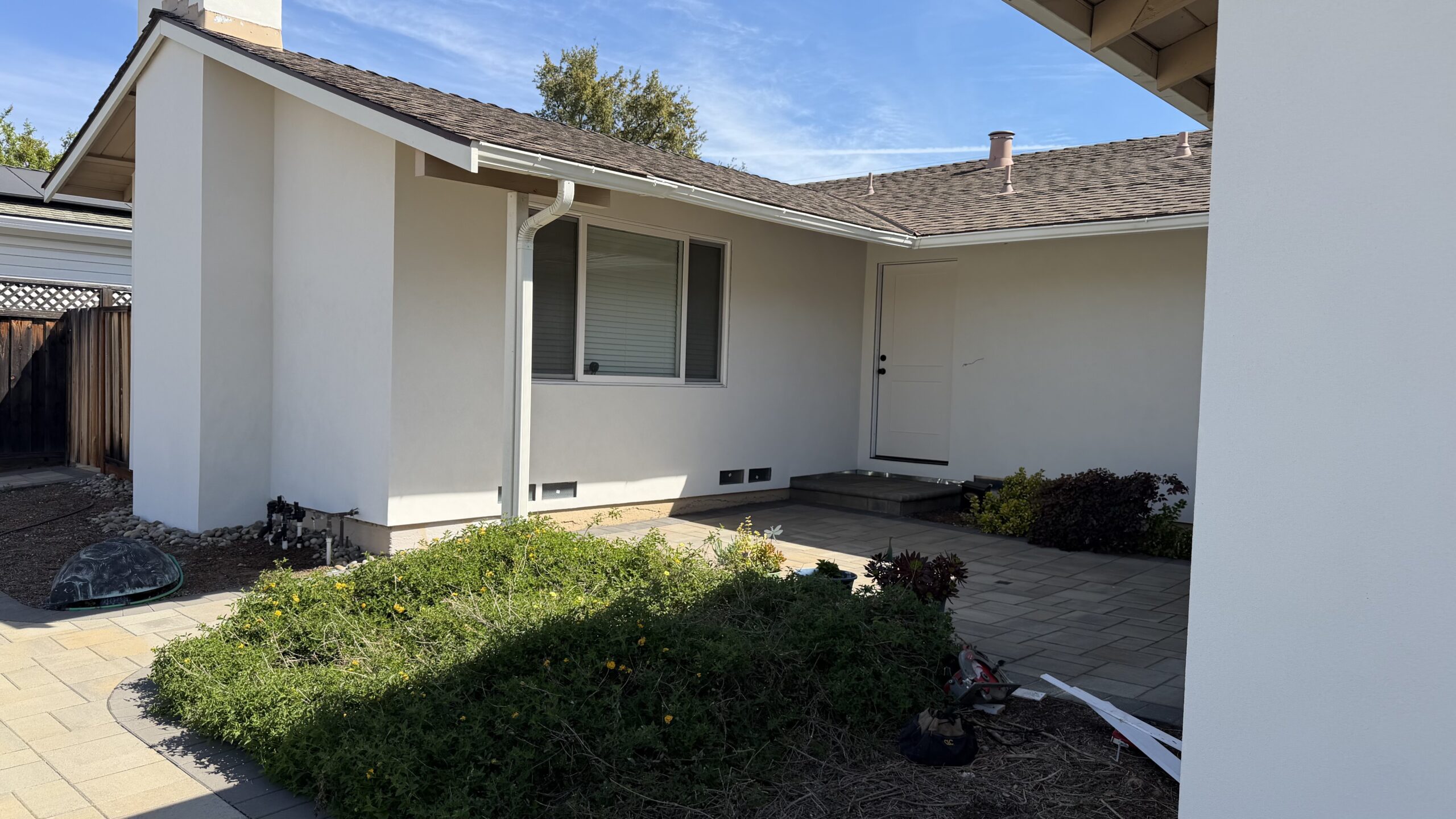
Stucco remains a highly weather-resistant cladding when installed correctly: a three-coat stucco system over a properly installed WRB and lath, with correct weep screeds and flashing, sheds water effectively and has performed well in California for generations. EIFS systems combine insulation with a weatherproof finish layer, and modern drainable EIFS assemblies include a drainage cavity that addresses the moisture management concerns that affected earlier-generation EIFS products.
As a stucco contractor first, this is where our foundation comes from. The same attention to flashing, weep details, and moisture management that goes into a properly installed stucco system carries over into how we approach every other cladding material we install.
Composite Wood Cladding
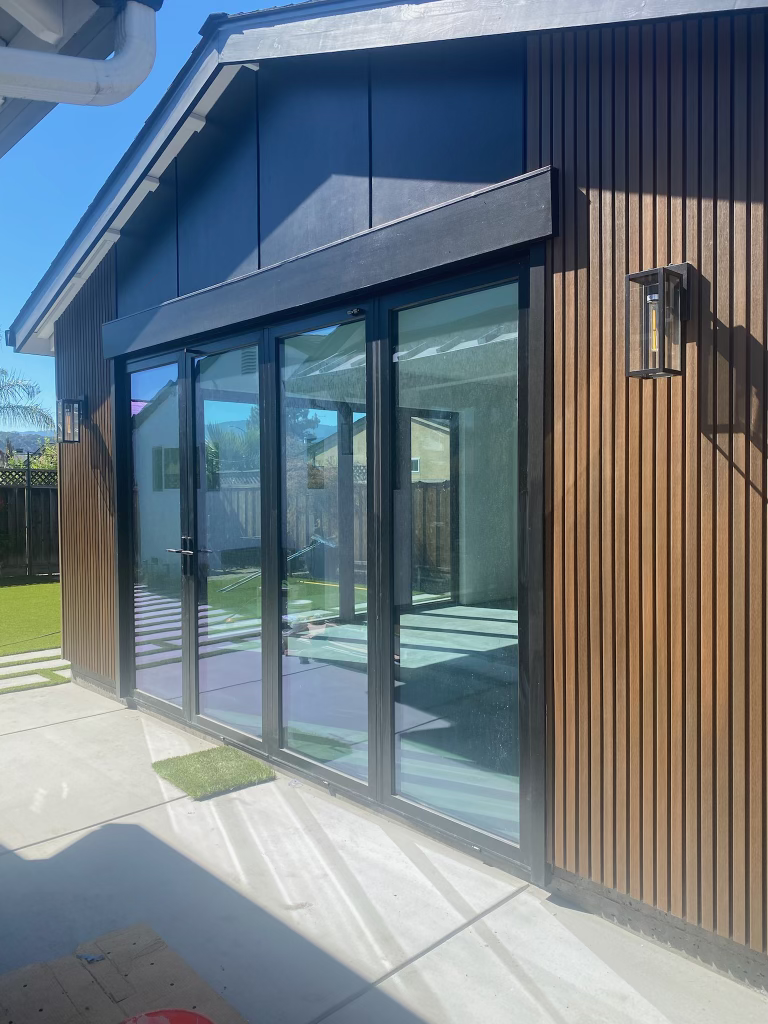
For property owners who want a wood appearance with better weather resistance than real wood, composite wood cladding products are engineered to resist moisture absorption and the swelling, cracking, and checking that affects real wood siding under repeated wet-dry cycling. Many composite wood products also carry fire ratings appropriate for WUI zones, adding fire resistance to the weather resistance equation for properties in higher-risk areas.
Common Weather-Related Exterior Problems We See in San Jose
Years of working on exterior walls across the South Bay has given us a clear picture of where weather-related problems tend to show up. If any of these sound familiar, it is worth having your exterior evaluated:
- Cracking and spalling stucco, often concentrated around windows, at corners, or along the foundation line, where building movement and moisture exposure are both concentrated
- Staining or discoloration on exterior walls, particularly below windows or at roof-wall intersections, which often points to a flashing issue allowing water to track down the wall face
- Paint failure on south and west-facing walls ahead of other elevations, reflecting the uneven UV exposure different sides of a building receive
- Soft spots or visible damage at the base of wood siding or trim, where repeated wetting from splash-back, irrigation overspray, or poor drainage has caused rot
- Corrosion or rust staining on metal components, particularly on properties closer to the Bay where salt air accelerates this process
- Efflorescence or mineral deposits on stucco or masonry surfaces, which indicates water is moving through the material and depositing dissolved minerals as it evaporates
Any of these signs can indicate that the existing cladding or wall assembly is no longer providing the weather resistance it was designed to provide. In some cases, the fix is a repair. In others, particularly where the underlying wall assembly has been compromised, a more complete re-cladding with an improved system is the more durable solution. We assess this honestly during our site evaluations.
Free Estimates
Free On-Site Consultations
Residential Weather-Resistant Cladding Projects
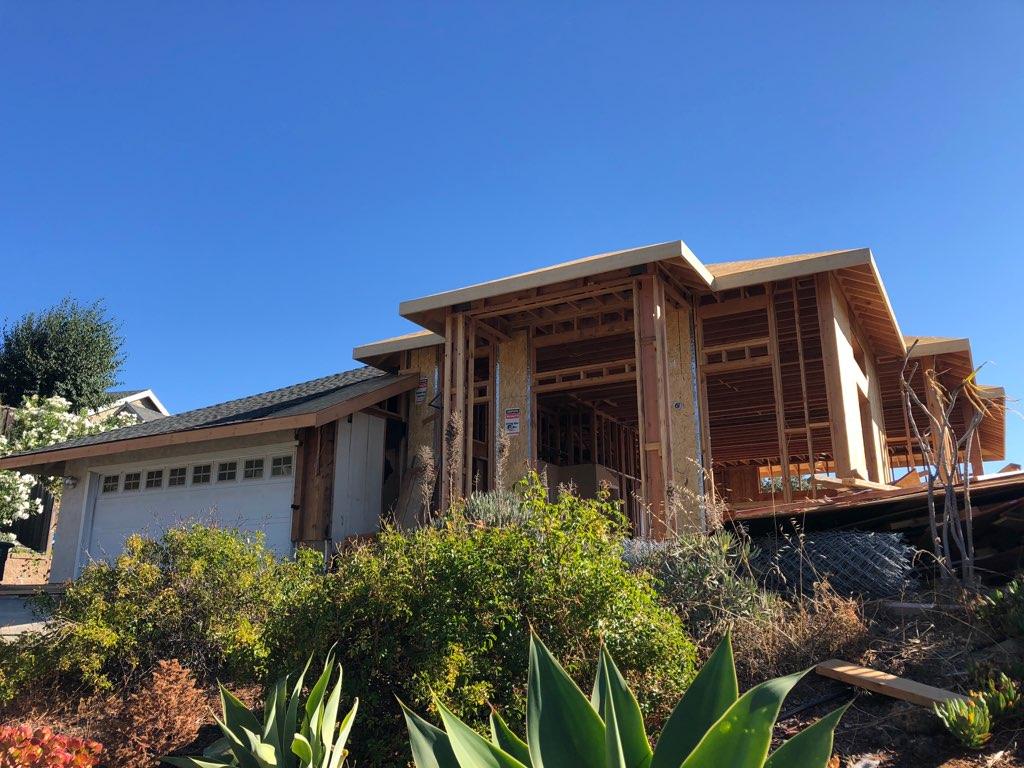
For homeowners, weather-resistant cladding upgrades typically come up in a few situations: an aging home where the existing siding or stucco has reached the point of recurring problems, a renovation project where the homeowner wants to improve the building’s performance as part of a broader exterior update, or new construction where the goal is to build in weather resistance from the start rather than dealing with it later.
We work on these projects throughout San Jose’s residential neighborhoods, including Willow Glen, Naglee Park, Almaden Valley, Blossom Hill, Berryessa, and the surrounding communities in Santa Clara County. Every residential project starts with a free on-site evaluation where we look at the existing wall conditions, identify any moisture-related issues, and discuss cladding options that fit both the home’s architecture and its exposure conditions.
Commercial Weather-Resistant Cladding Projects
Commercial property owners think about weather resistance partly in terms of building performance and partly in terms of risk management. A commercial building with a compromised wall assembly is exposed to potential interior water damage, mold issues, and the liability and cost that come with those problems. Beyond the risk dimension, a weather-resistant cladding system that holds up without ongoing repairs reduces the maintenance burden on the property over its operating life.
We work on commercial weather-resistant cladding projects across San Jose, including retail and office buildings along the North First Street corridor and Stevens Creek Boulevard, multi-family residential properties, and mixed-use developments throughout downtown and the surrounding areas. For commercial clients, we can also evaluate existing buildings for weather-related vulnerabilities as part of a broader facility assessment, separate from any immediate renovation plans.
Our Installation Process
Site Evaluation
We start every project with a free on-site visit. We look at the existing cladding and wall assembly, identify any signs of moisture intrusion or weather-related damage, and assess the building’s exposure conditions: which elevations face the prevailing weather, whether the property is in a higher fire-risk zone, and whether salt air exposure is a factor.
System Design and Material Selection
Based on the evaluation, we recommend a cladding system and wall assembly approach suited to the building’s specific exposure conditions and your aesthetic and budget goals. For projects where moisture issues already exist, this includes a plan to address the underlying cause, not just install new material over an unresolved problem.
Substrate and WRB Work
Before new cladding goes on, we address the water-resistive barrier, repair any substrate damage, and install all necessary flashing at windows, doors, penetrations, and the foundation line. This is the work that determines how the wall assembly performs over time, even though most of it will be hidden once the project is complete.
Cladding Installation
We install the selected cladding system per manufacturer specifications and applicable codes, with careful attention to fastening, joint treatment, sealant application, and drainage details throughout.
Final Walkthrough and Warranty
We walk the completed project with you, answer any questions about maintenance, and back our work with warranties. We also price-match any competitor’s written estimate.
Common Questions About Weather-Resistant Exterior Cladding
How do I know if my current exterior is providing adequate weather protection?
Signs that your current cladding may not be performing as it should include visible cracking, staining, discoloration concentrated in certain areas, paint failure ahead of expectations, soft or damaged areas at the base of walls, or any history of interior moisture issues near exterior walls. A site evaluation can identify whether these are surface-level issues or signs of a deeper wall assembly problem.
Is a rainscreen assembly necessary for every cladding project?
No, but it is worth considering for projects on west and south-facing walls with significant sun and rain exposure, for buildings that have experienced moisture problems previously, and for properties in microclimates with wind-driven rain. For new construction or full re-cladding projects, a rainscreen assembly is often a relatively small additional step that provides meaningful long-term benefit. We discuss this during the design phase of each project.
Does weather-resistant cladding cost more than standard installations?
Some weather-resistant cladding materials, particularly metal, phenolic, and HPL panels, do carry a higher material cost than standard siding or stucco. The additional details involved in a rainscreen assembly or enhanced flashing package also add to installation scope. The trade-off is reduced repair and maintenance costs over the life of the building, and in many cases, better protection against costly water damage. We are happy to walk through these trade-offs clearly during your consultation.
Can weather-resistant cladding be installed on an older home?
Yes, and this is a large part of what we do. Older homes throughout San Jose’s established neighborhoods are strong candidates for weather-resistant cladding upgrades, particularly when the existing exterior has reached the point of recurring problems. The process includes addressing any existing substrate or moisture issues as part of the installation, so the new cladding is going onto a wall assembly that is ready to support it.
What cladding holds up best against salt air near the Bay?
For properties in Alviso and other areas closer to the Bay shoreline, we typically recommend fiber cement, phenolic/HPL panels, or metal systems with alloys and coatings specifically rated for marine or coastal exposure. Standard steel products without appropriate coatings can corrode noticeably faster in these conditions, so material selection matters more in these locations than it does further inland.
Service Area
We serve residential and commercial clients throughout San Jose and the South Bay:
- Downtown San Jose, Japantown, Willow Glen, and Rose Garden
- Naglee Park, Roosevelt Park, and surrounding historic neighborhoods
- Almaden Valley, Blossom Hill, and South San Jose
- Berryessa, Alum Rock, and East San Jose
- Alviso and areas near the Bay shoreline
- North San Jose and the North First Street corridor
- Milpitas (ZIP 95035), Saratoga (ZIP 95070), and Evergreen (ZIP 95135)
- Santa Clara, Campbell, Los Gatos, and surrounding South Bay communities
For larger commercial projects, we serve the broader Bay Area. Call to discuss your location and project scope.
Get a Free Estimate on Weather-Resistant
Exterior Cladding in San Jose
San Jose Stucco & Plastering has spent over 30 years learning what it takes to keep South Bay buildings protected from the weather. That experience shapes every cladding system we install, whether it is traditional stucco, fiber cement, metal panels, or a full rainscreen assembly.
We offer free estimates and free on-site consultations with no obligation, and we price-match any competitor’s written estimate. If your exterior is showing signs of weather-related wear, or if you are planning a renovation and want to build in better long-term protection, we are happy to take a look and give you a straight assessment.